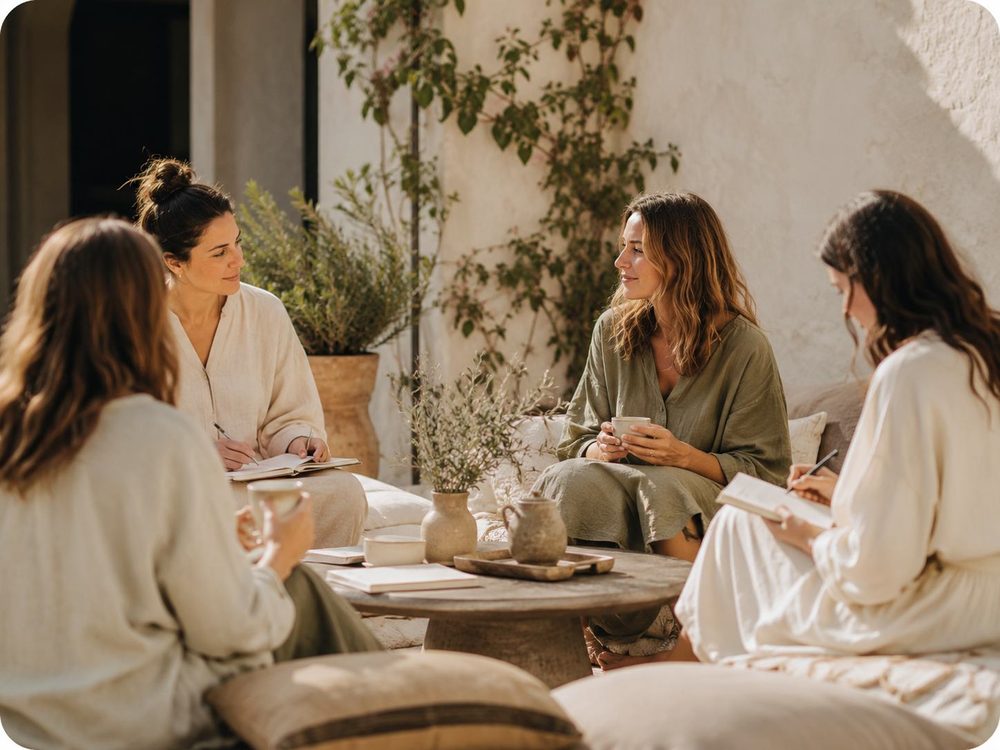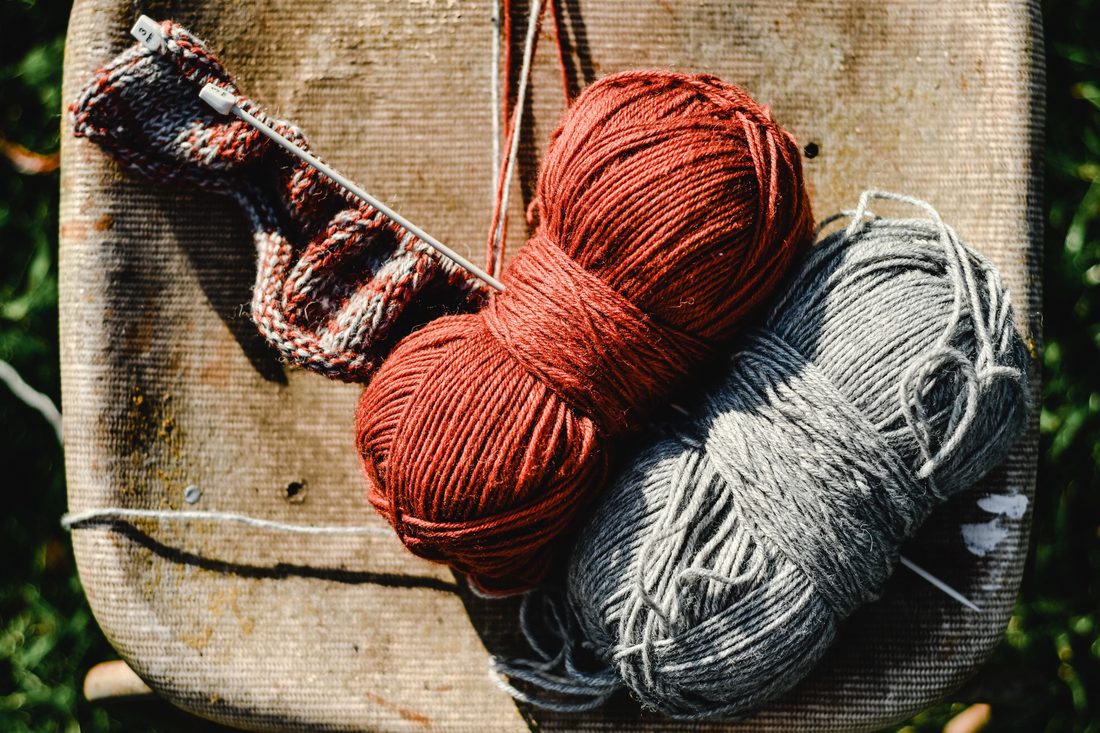
A small group changes the texture of a week. With fewer people around the table there is more room for the conversation to wander, for a question to be answered properly, and for the days to keep their own pace. This is not a detail of logistics. It is the reason a retreat feels the way it does.
The size of the table
Most of what happens on a retreat happens sideways: over a shared bowl, at the sink after a dyeing session, on the walk back from the village. Those moments need a group small enough that nobody has to raise their voice or wait their turn to be heard.
Beyond a certain number a group stops being a group and becomes an audience. People settle into roles, the quieter guests stop speaking, and the week starts to run on a schedule rather than on attention. Keeping the numbers low is the simplest way to prevent that from happening at all.
Attention that reaches everyone
In a craft session, help has to arrive at the right moment. A loom threaded wrongly, a pot walled too thin, a dye bath left five minutes too long — these are all recoverable if someone notices in time, and all frustrating if nobody does. A maker teaching six people can watch six pairs of hands. Teaching twenty, they can only watch the room.
It also means the teaching can bend to the person. Some guests arrive having spun for years and want to be pushed. Others have never held a shuttle. In a small group both can be served in the same session without either one being held back or left behind.
In practice
- Sessions can start when the group is ready, not when the clock says so
- Everyone gets bench space, good light, and their own set of tools
- A day can be reshaped around the weather or the mood of the group
- Local visits stay welcome rather than becoming an intrusion
- Meals stay one table, one conversation
A group is small enough when nobody has to wait to be noticed.
Learning without performance
Making something badly in front of strangers is uncomfortable, and most adults have long since stopped doing it. A small group lowers the stakes. After two days the strangers are no longer strangers, and the first wobbly bowl becomes something to laugh about rather than hide.
That comfort is what makes the second half of a retreat productive. Guests stop managing how they look and start paying attention to the material in front of them. The work gets better because the self-consciousness has gone.
A pace set by the group
Large groups need buffers. Every transition costs time, so the schedule fills with margin, and the margin gets sold back to guests as free time it never really was. Twelve people can leave a house in ten minutes. They can also decide, mid-morning, that the session is going well and should keep going.
The result is a week that feels roomy without being empty. There is structure — guided sessions, a visit, a shared table each evening — but the structure is light enough to move.
What small group does not mean
It does not mean constant togetherness. A good small-group retreat protects solitude as carefully as it protects the shared table: afternoons with nothing scheduled, a room of your own to return to, and no expectation that you join everything. Guests who want to read alone by the window on day four should be able to do exactly that.
Nor does it mean informal. Small groups still need clear timings, honest inclusions, and a host who has thought about the week in advance. The intimacy is the point; the planning is what makes it possible.