Portugal is small enough to cross in a day and rich enough that doing so is a mistake. It is a country built for staying, and it repays the traveller who picks one valley over five cities.
Short distances, deep places
The whole country is roughly the size of a large region elsewhere in Europe, yet the landscape changes completely every hundred kilometres: Atlantic coast, terraced river valleys, granite uplands, cork plains. That density means you never need a long transfer to see something different, which removes the usual excuse for rushing.
Choose one base and the map opens up around it. Everything worth seeing is within an hour, and you get to come back to the same table each evening.
A culture that already moves this way
Slow travel is easier in a place that has not organised itself around hurry. Lunch in the interior takes as long as lunch takes. Shops close in the afternoon. Conversation with a stranger is not treated as an interruption to the day but as a reasonable use of it.
Visitors sometimes read this as inefficiency. After a week most stop reading it that way, and a few never fully readjust when they get home.
You have not seen a place until you have been bored in it once.
Craft you can still walk into
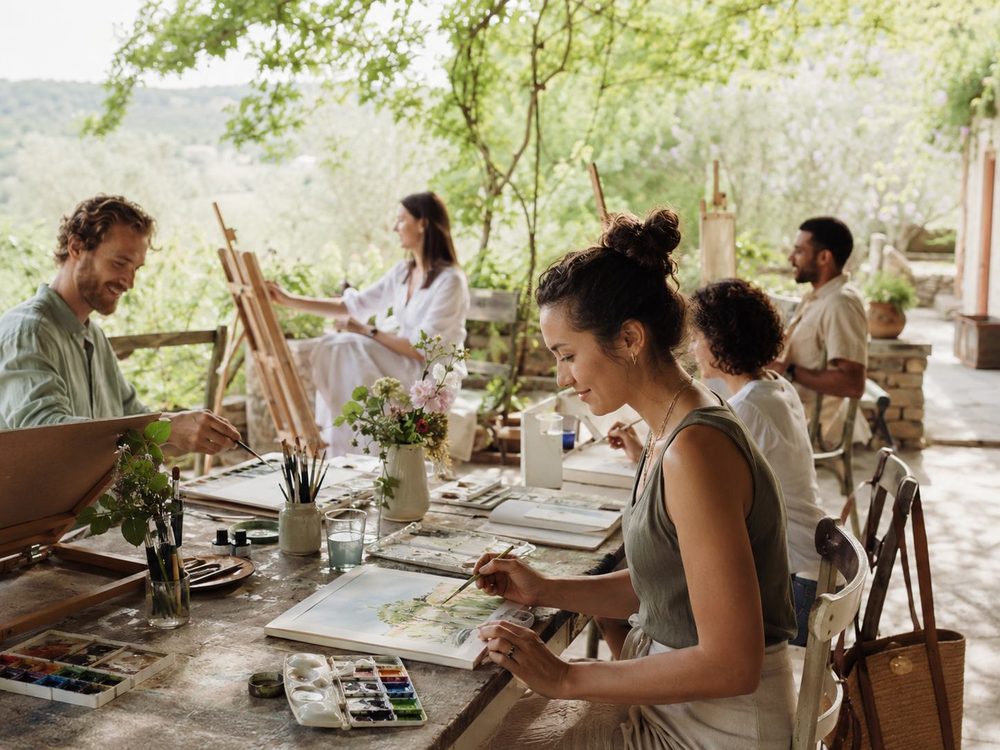
Portugal kept its making traditions later than most of Western Europe, and in places it never lost them. Wool mills in the Serra da Estrela, potteries in the Alentejo, tile workshops, cork, basketry, hand-loomed blankets — much of it still commercial rather than curated.
For a traveller this is the difference between watching a demonstration and standing in a working room. It also gives a week a spine: something to learn, rather than a list of sights to complete.
Food as an argument for staying
Portuguese cooking is regional to an unusual degree, and most of it does not travel. The bread stews of the Alentejo, the seafood of the south-west coast, the cheeses of the Serra, the wines of the Douro and the Dão — each belongs to a specific set of hills, and each is better where it is made.
Staying in one region for a week means eating the same regional repertoire six or seven times and beginning to tell the versions apart. That is a small pleasure, and it is only available to people who stop moving.
When to go
- Spring — green interior, long light, cool enough to walk all day
- Early autumn — warm water, the harvest under way, fewer visitors
- Winter — quiet, wet in the north, and unexpectedly good for studio work
- High summer — best on the coast; the interior can be punishing inland
Building the itinerary
The simplest slow itinerary is one region, one base, and a week. Add a second base only if you want a genuine contrast — coast and interior, say — and give each at least four nights. Travel days cost more than they look like they do.
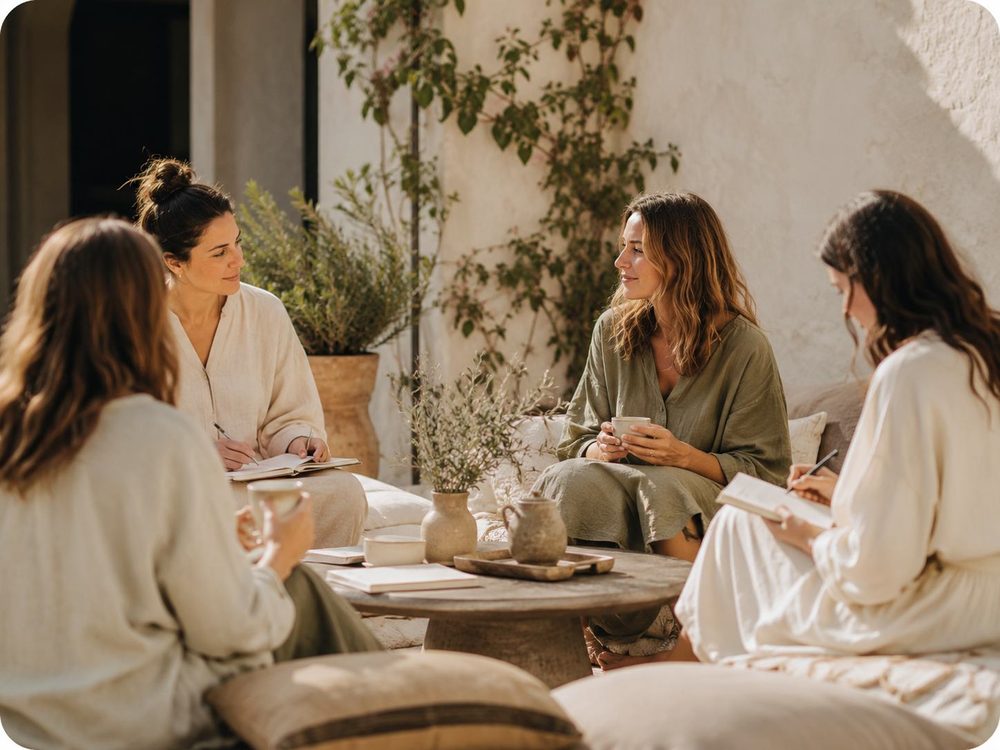
A retreat does that structuring for you, which is much of its appeal. The week has a place, a purpose, and a table to come back to, and nobody spends the evening deciding where to go next.