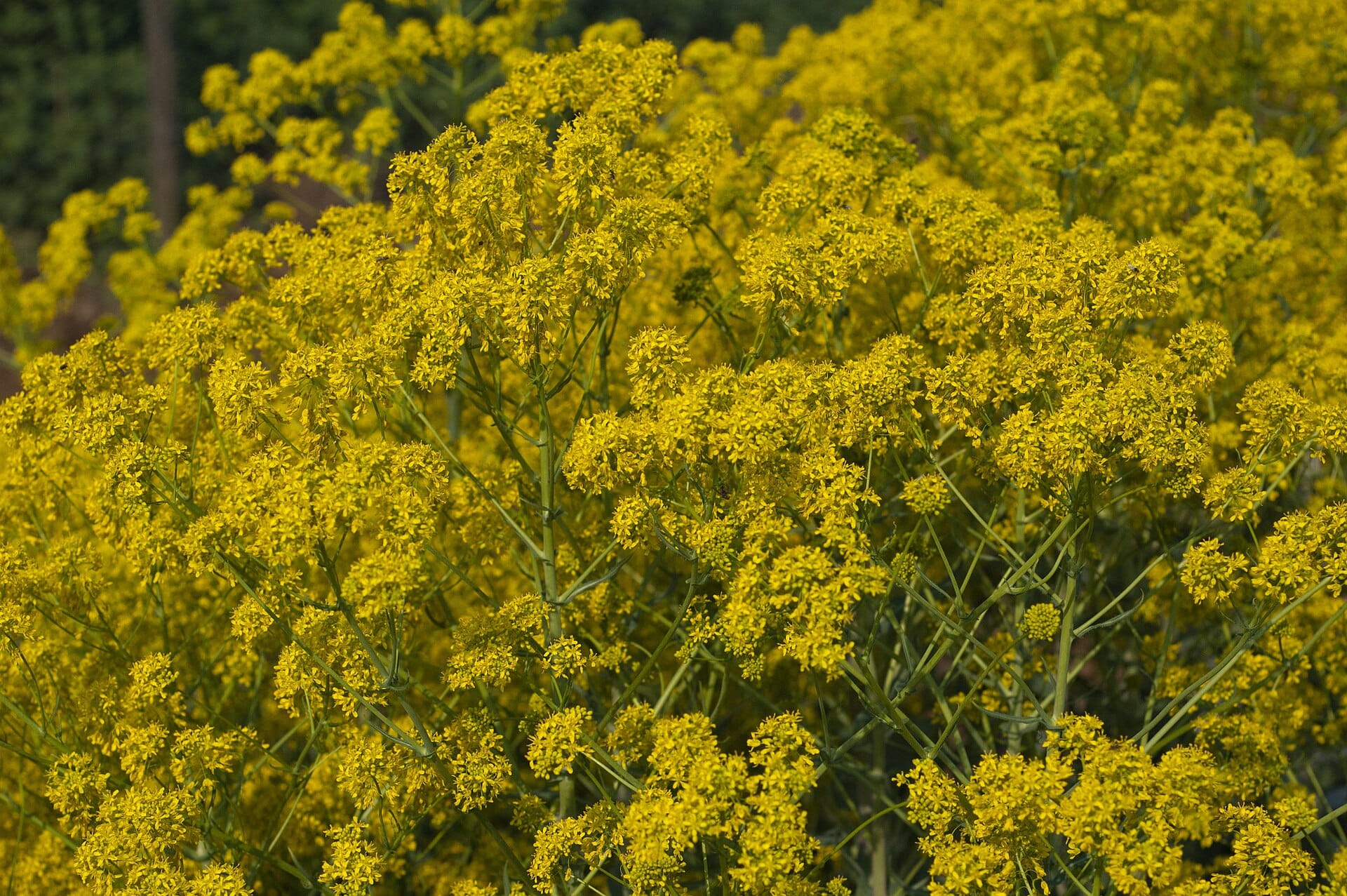

Before the first synthetic dyes appeared in the 1850s, every dyed thread in Europe owed its color to a plant or an insect. For blue, dyers relied on woad, a yellow-flowered plant in the cabbage family whose leaves carry the same pigment as indigo. Portugal grew and taxed it for centuries, and in the 16th century woad from the Azores was valuable enough to pay for the islands’ shipping.
Today Flora-On, the national database of Portuguese plant records, holds 4 occurrences of woad, Isatis tinctoria, in the whole country, clustered on stony ground above the Douro near the chapel of São João das Arribas. That gap between what the archives record and what still grows is where any honest look at the natural dye plants of Portugal has to start. The country still has a dyer’s flora and a technical literature in Portuguese that reaches back to a royal cloth regulation of 1690. A handful of studios keep working with it, yet little remains of the plant material the old trade ran on, and several of the plants that sound most promising are the hardest to find.
Key takeaways
- Cultivated madder, Rubia tinctorum, does not appear in Portugal’s wild flora at all. The Iberian wild madder, Rubia peregrina, has 3,116 recorded occurrences and grows almost everywhere.
- The 1690 Regimento da Fábrica dos Panos names woad from the Azores, madder bought in Castile and Flanders, and kermes insects gathered on the carrasco scrub of Setúbal and Sesimbra.
- A team led by Maria João Melo at FCT NOVA identified the molecule behind the medieval blue called folium in 2020, working from Chrozophora tinctoria fruit gathered in the Alentejo east of the Guadiana.
- Carrapateira sits inside a natural park whose management plan restricts the gathering of protected flora.
Blue from pastel, the plant that made and lost a fortune
Portuguese documents call woad pastel and start naming it in 1445, when cultivation along the Douro came under a monopoly granted to the Infante D. Henrique. Some sources date it to 1455. The Crown took the trade seriously enough to invent an inspector for it, the lealdador do pastel, an office created in 1536 to certify quality, which tells you how much money was moving.
Production then shifted to the islands, and the Azores overtook the mainland as the center of the trade, with Terceira and São Miguel supplying Flanders and England. One secondary account puts São Miguel’s late sixteenth-century output at 100,000 quintais a year, a figure worth treating cautiously since it rests on a single source [confirmar]. Madeira grew it too, and the Genoese merchants who handled the cargoes called the island the island of pastel. The Madeiran encyclopedia also records who did the work, with young enslaved boys carrying shallow baskets of leaf into a shed where it rested a few days to wilt before milling.
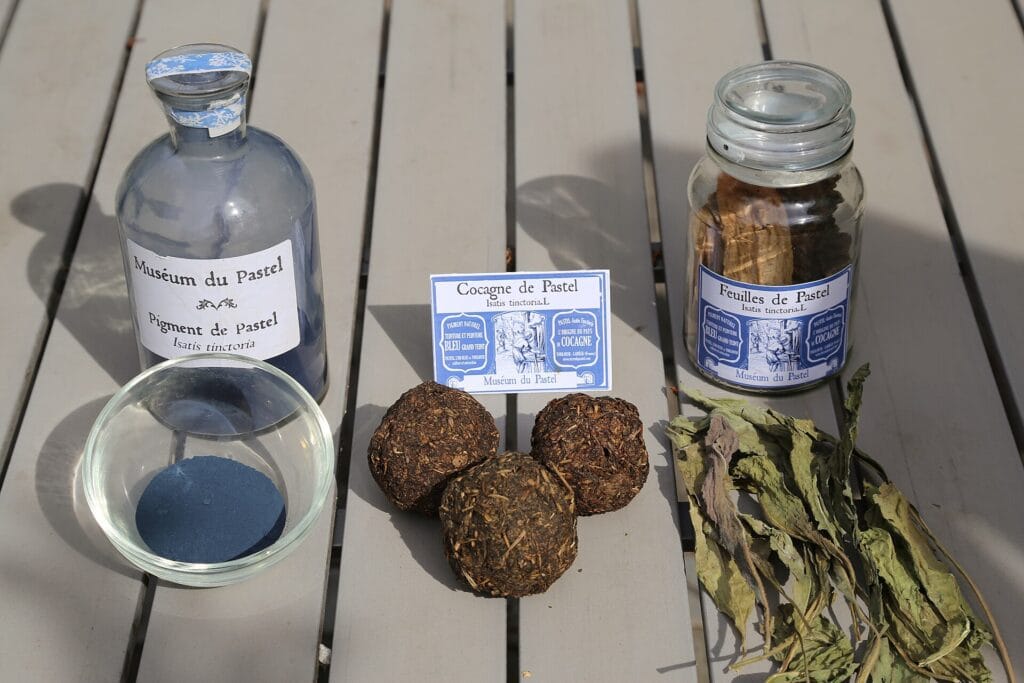
Making dye out of it meant steeping the leaves nine to fourteen hours, crushing them, then rolling the pulp into balls and leaving them to ferment, a stage the Portuguese literature describes bluntly as producing an intense putrid smell. All that labor lost out to Spanish-American indigo, which arrived far stronger per kilo, and from the last quarter of the seventeenth century the Portuguese trade collapsed. The place names outlasted the industry, and Canada do Engenho and Pasteleiro both survive on Faial near Horta, marking where the mills stood.
Reds from roots and from insects
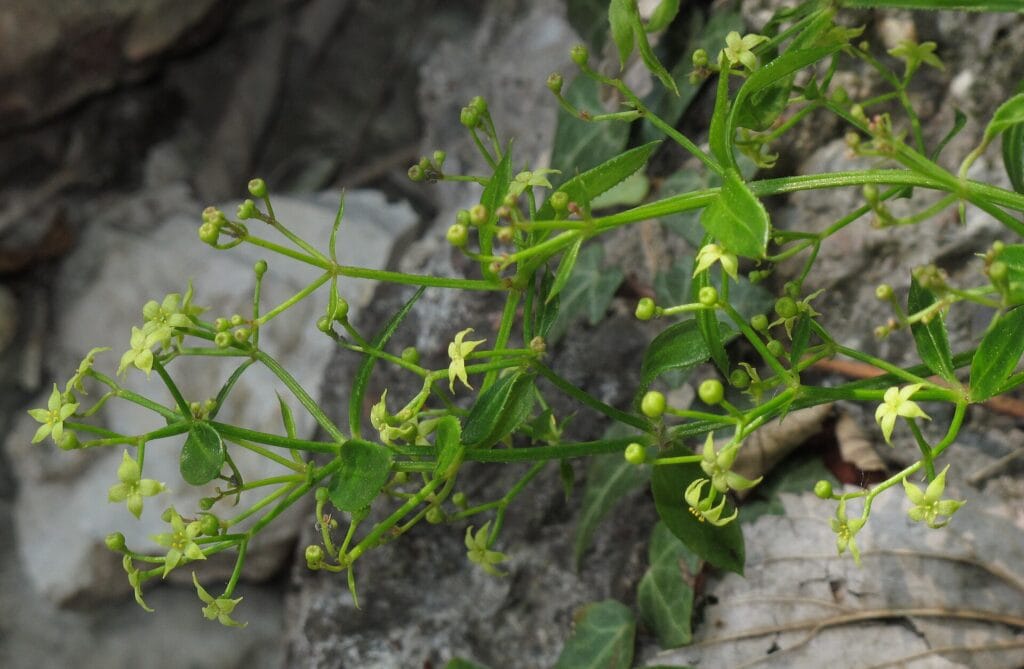
Madder is where the gap between archive and field is widest. The 1690 Regimento prices madder by origin, Castilian costing more than Flemish, which means Portuguese dyers were importing roots rather than digging them. Flora-On returns no record of Rubia tinctorum in Portugal at all. The plant that is here, abundantly, is Rubia peregrina, ruiva-brava or raspa-língua, a shade-loving scrambler of hedges and evergreen woodland with more than three thousand recorded occurrences. It shares the genus and carries related anthraquinones, but it is not the plant the European dye trade was built on, and nobody should assume the two behave alike.
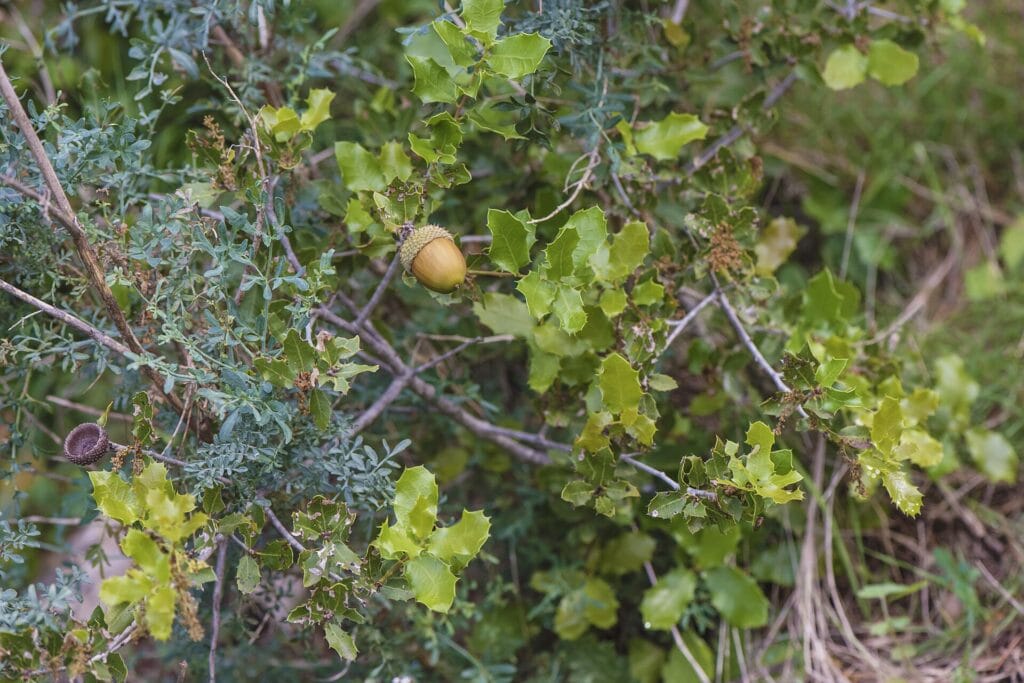
The red Portugal did produce came from an insect. Kermes vermilio lives on Quercus coccifera, the low spiny oak Portuguese calls carrasco, which covers the Algarve barrocal and the central limestone belt in dense thickets. Luís Gonçalves Ferreira’s 2024 study of early modern Portuguese dyeing states that the kermes used by the Portuguese cloth industry was harvested in Setúbal and Sesimbra. A parish survey of 1747 found the same insect in quantity on the Serra de Ansião and recorded workshops there that processed it, calling it grã de carrasco and, in the trade, chermes.
Kermes had to be harvested at a precise moment, since the females carry the pigment only at the peak of their adult month, and a kilo of dried dyestuff takes roughly 50,000 to 60,000 insects. Portuguese sources put the gathering window at the end of May into early June, English-language accounts at July and August. Mexican cochineal, stronger per gram, pushed kermes out of European use entirely.
Cochineal, the insect that replaced kermes, went on to write an Atlantic island story of its own, one still running in the Canaries. The insect reached the Canary Islands from Mexico by way of Cádiz in 1824, and by 1869 the archipelago exported a record 2,871,818 kilos of dried grana before synthetic dyes ended the industry. Canary cochineal received a Protected Designation of Origin in 2015 and tests at 18 to 20 percent carminic acid, higher than other producing countries, but only one company is now active. On Lanzarote it is still scraped off the cactus pads with a large spoon at Guatiza and Mala, and dried on boards in the sun.

A wild relative, Dactylopius opuntiae, is a pest that can kill the prickly pear it feeds on. It has been damaging prickly pear in Murcia and Andalusia since the mid-2000s. It reached the Canaries by accident, turning up on La Palma in 2010, and the Canarian agriculture department declared it a plague in August 2023. Whether it has reached mainland Portugal is less clear. The Portuguese invasive species platform mentions it only as a biological control agent used elsewhere, and the official Algarve plant health circulars name other pests on Opuntia but not this one, so an established Portuguese population is not documented [confirmar]. Nobody in Portugal could legally farm cochineal in any case. Opuntia ficus-indica is itself legally invasive under Decreto-Lei 92/2019, and the ICNF rules forbid growing, keeping or trading it for ornamental purposes.
Yellows that hold their color
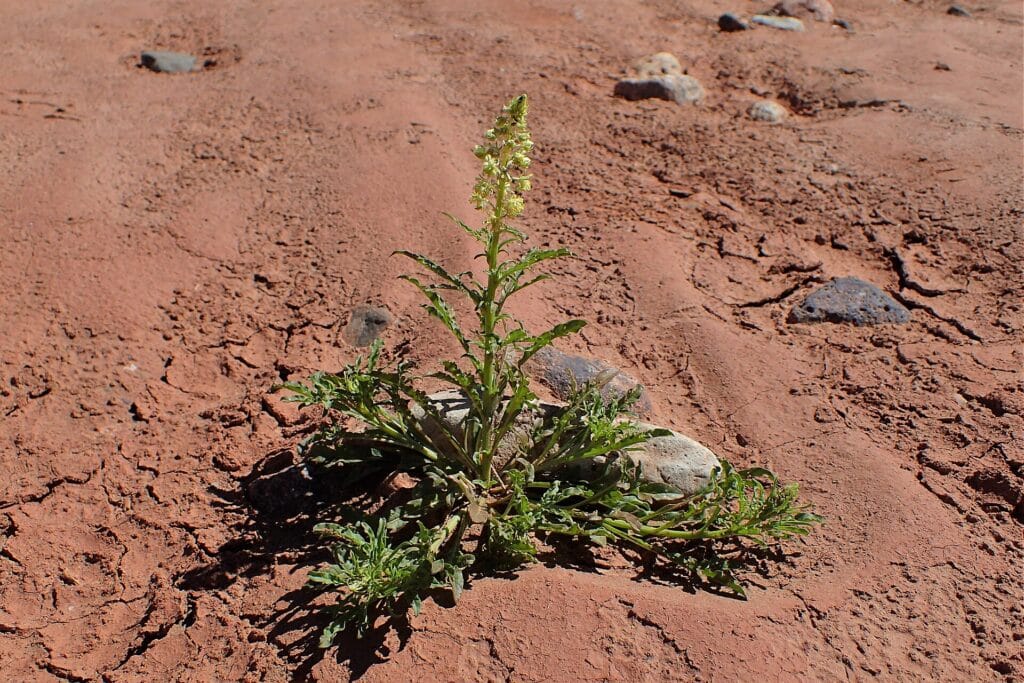
Weld, Reseda luteola, was the most used dye in western Europe before 1492 and remains the best yellow a dyer can grow. Its Portuguese names include gauda and lírio-dos-tintureiros. It flowers from April to September, behaves as a ruderal weed on fallow ground and roadsides, and prefers sandy soil, with 532 Flora-On records across the mainland, the Azores and Madeira. One caveat matters in the south, where the UTAD botanical garden lists it as absent from the Sotavento, the eastern Algarve. Growers harvest it at flowering in August, when pigment content peaks, using stems, leaves and seed coats. The colorant is luteolin.
Dyer’s broom, Genista tinctoria, calls for more caution than it usually gets. Flora Iberica records it in a few Portuguese provinces, Baixo Alentejo, Estremadura and Ribatejo among them, while Flora-On returns no species at all for the name. It is neither an Algarve plant nor a common Portuguese one.
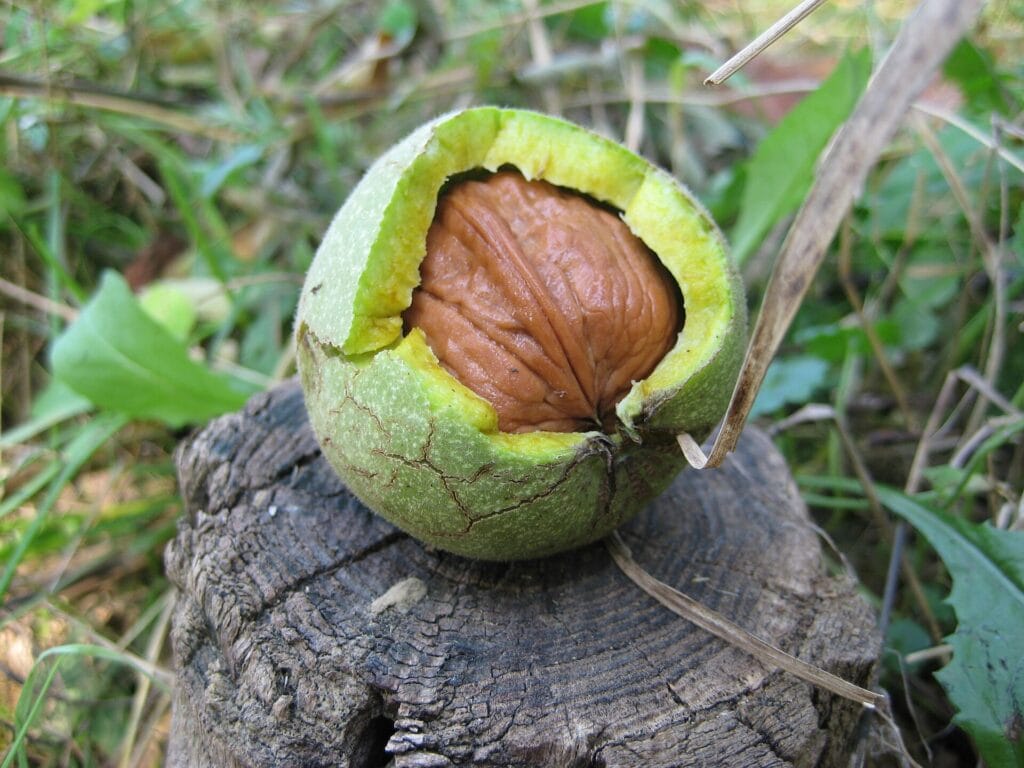
The browns and blacks that complete a dyer’s palette come from tannin. Walnut hulls work without a mordant, which makes them the easiest first dye anyone can try, but Juglans regia here is a tree of river valleys and the north, needing at least 700 millimeters of rain, and the UTAD record has it absent from the southern Algarve. In the south the tannin comes from acorns and from bugalhos, the galls that cynipid wasps induce on young oak shoots by reprogramming the plant’s own growth. Ground with iron salts those galls made the ferrogallic ink of medieval manuscripts, and the 1690 Regimento lists gallnuts among the dyestuffs a Portuguese cloth works kept in stock.
Folium, the Alentejo plant that solved a medieval puzzle
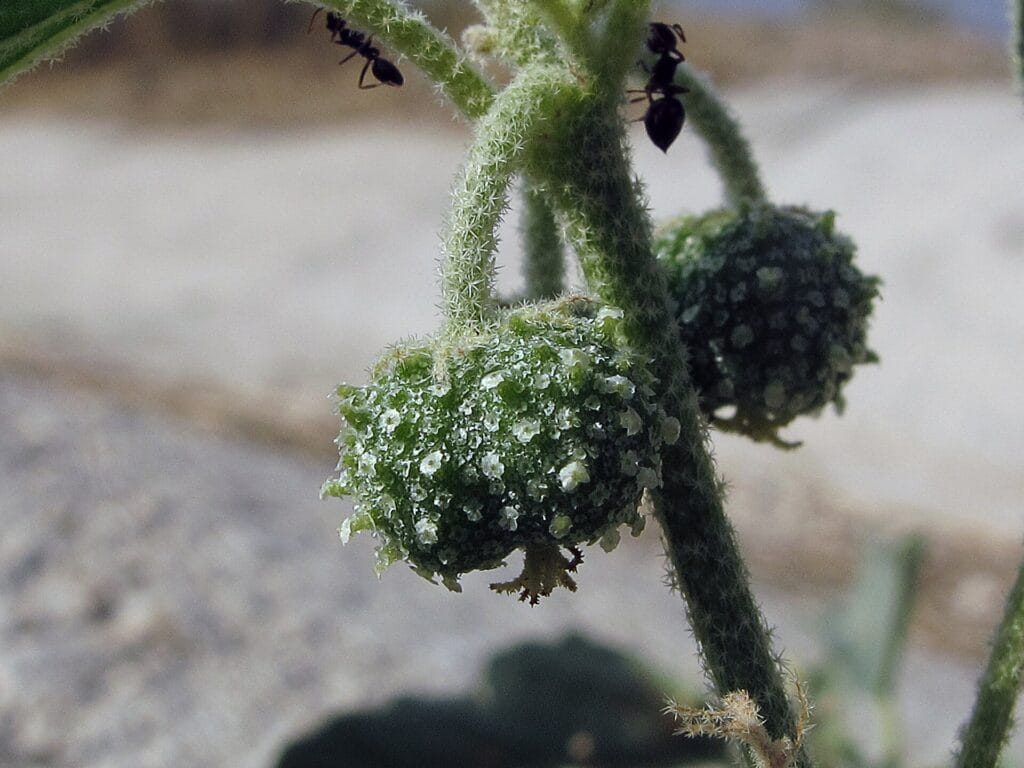
Those same medieval manuscripts hold a puzzle that took a thousand years to solve. They describe a blue to purple colorant called folium, among them the Livro de como se fazem as cores, a Judeo-Portuguese manuscript held in Parma as Ms 1959. The plant was understood to be Chrozophora tinctoria, tornassol-dos-tintureiros in Portuguese, a small Euphorbiaceae of stubble fields and stony dry ground. What the chemistry was remained open.
A Portuguese-led team answered it in April 2020. Maria João Melo at FCT NOVA, working with colleagues at the University of Porto and the University of Aveiro, isolated the chromophore, named it chrozophoridin and concluded that it belongs to neither the anthocyanins of blue flowers nor the indigoid family but forms a class of its own. Victor Freitas at Porto described the analytical problem in a sentence, that the molecule presents few hydrogens, which ruled out the more sensitive techniques. The full author list on the Science Advances paper is worth checking against the journal before this goes out [confirmar].
The fruit behind the discovery was gathered in the Alentejo. The National Library’s account names Granja, in the municipality of Mourão, one of the places where the plant is genuinely native, and notes that the dye was taken from the fruits without crushing the seeds. Other accounts place the fieldwork near Amareleja or Monsaraz, the same corner of the Alentejo east of the Guadiana. The gathering ran in early autumn across three seasons from 2016 to 2018.
Mordants, and why one plant gives two colors
Most plant dyes have no grip on wool or linen by themselves. A metal salt dissolved in water deposits a metal ion inside the fiber, the dye molecule clamps onto that ion, and the two form an insoluble colored complex locked in place. The conservation reference at the Museum of Fine Arts in Boston puts the consequence plainly, that the color of the dye varies with the composition of the mordant. Swapping aluminum for iron does not shift the shade slightly, it gives a different color out of the same dye bath.
Alum, the most important of these salts, was something Portugal bought rather than mined. The Iberian sources were Castilian, the Mazarrón mines in Murcia and Rodalquilar in Almería from 1509, with Genoese and Catalan merchants carrying the trade. Portuguese dyers knew it as pedra-ume, and no evidence points to alum production in Portugal itself.
What the Portuguese record does give is the rest of the shelf. The 1690 Regimento works with alum, tartar, iron sulfate under the name caparrosa, and sumac, a shrub one Portuguese survey describes as appearing spontaneously across the whole country from Trás-os-Montes to the Algarve. For the finest cloths the proportions are recorded, with alum at around 6 percent of fabric weight, tartar at 6, iron sulfate at 2 and sumac at 4. Eighteenth-century Arraiolos carpet wools were dyed at home with pedra ume and urine, according to a Universidade de Évora thesis on their photodegradation, and urine was still in use in the Covilhã mills in the mid-twentieth century for its acidity.
Where to look for natural dye plants in Portugal through the year
Phenology moves with the year and with altitude, so treat what follows as an indication from published flowering and fruiting records rather than a timetable.
- March. Sowing month for a dye garden. Lisbon’s Tinctorium Studio starts coreopsis, cosmos, scabiosa and Japanese indigo from seed now.
- April to June. Cistus ladanifer, the esteva, in flower, including the subspecies endemic to Portuguese sea cliffs. Weld begins flowering in April, and woad leaf is cut in May, with growers taking three or four cuts a year.
- Late May into June. The kermes window on carrasco, by the Portuguese accounts.
- August. Weld at flowering, the point of maximum pigment.
- September and October. Chrozophora fruit, the folium season. Walnut hulls in the valleys and the north.
- November and December. Acorns and oak galls, collected once they have matured and hardened.

One plant to recognize and leave alone is Daphne gnidium, trovisco, which flowers from July into October across practically every Portuguese habitat including the Algarve barrocal. Its recorded traditional uses run to brooms and rope rather than dye, and every part of it carries highly toxic coumarins that blister skin on contact with the sap.
What the law allows and what it does not
Before you cut anything on that calendar, check whether you’re allowed to. Decreto-Lei 140/99, the decree that brings the EU Habitats Directive into Portuguese law, prohibits the gathering, cutting, uprooting or destruction of plants listed in its Annexes B-II and B-IV, anywhere in the country and at any stage of their life cycle, along with their transport and sale. Species in Annexes B-V and D may be harvested under regulated conditions. Check your plant list against those annexes rather than assume.
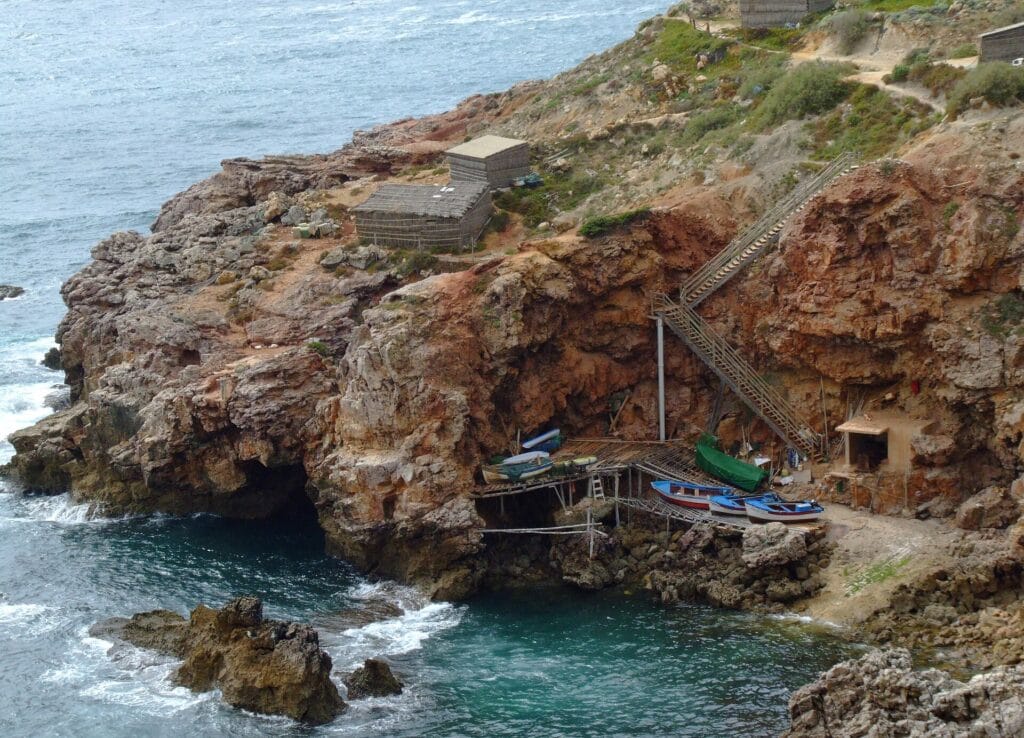
Inside a natural park the rules tighten. Carrapateira, in the freguesia de Bordeira in the Aljezur municipality, lies within the Parque Natural do Sudoeste Alentejano e Costa Vicentina, created in 1988 and reclassified as a natural park in 1995, covering about 89,425 hectares across Sines, Odemira, Aljezur and Vila do Bispo. Article 8 of the management plan approved in 2011 interdicts the gathering, capture, killing or holding of specimens of any flora and fauna species subject to legal protection measures, with exceptions only for conservation or scientific work the state conservation body has authorized. Article 9 makes nature tourism a conditioned act requiring an ICNF opinion. The successor program for the park appears on the national territorial management portal marked as lapsed, so whether the 2011 regulation remains fully in force merits a direct call to ICNF [confirmar].
Outside protected areas, the practical guidance Portuguese bodies actually publish comes from the 2014 harvesting guide produced by the Associação Portuguesa de Horticultura with INIAV. It says to establish who owns the ground and ask first, from the owner on private land and from the managing body on commons and national forest. It lists what to leave alone, including species that are locally rare, legally protected or slow to reproduce. And it gives percentages for leaving a stand able to recover, with no more than 20 percent of roots or bulbs, 30 percent of leaves and 70 percent of flowers. Those figures come from the FairWild code as Portuguese environmental organizations adapted it, and they make the most quotable foraging policy in print.
Two recipes worth starting with
Both come from published sources that give full numbers, and both use madder, which punishes carelessness more clearly than any other dye and so teaches faster.

Alum mordant and madder on wool
From the Maiwa Guide to Natural Dyes. Mordant with alum at 15 percent of the weight of fiber, with cream of tartar at 6 percent optional, in a bath thirty times the weight of the fiber. Start at 45°C, raise to 90°C for wool over 30 to 45 minutes, hold an hour, then cool in the bath for 20 minutes. Rest the wool in a damp white cloth for a day or two before dyeing, since longer contact between mordant and fiber gives a more even result. For the dye bath, use ground madder root at 35 to 100 percent of fiber weight, bring it to about 60°C, hold an hour, then add the fiber and continue one to two hours. For clear reds, keep the temperature under 72°C.
Madder root, slow and in two stages
From Botanical Colors. Scour and mordant the fiber first, then use madder at 100 percent of fiber weight, less for coral and orange. Soak the roots in cold water overnight to soften them, then crush or chop them. Bring the bath to about 33°C and hold it there for 30 minutes, rotating the goods gently, then raise it gradually to 77°C and hold 30 to 45 minutes. For burgundy, add calcium carbonate at 3 to 5 percent of the weight of the madder and hold another 30 to 60 minutes. The two sources disagree by five degrees on the ceiling and warn about the same failure. Boil madder and you get mud.
Where to learn natural dyeing in Portugal
Both recipes are easier to follow after a day at the dye pot with a teacher, and Portugal has a few places that offer one. Saber Fazer in Porto, run by Alice Bernardo and Miguel Barbot since 2011 from Rua da Aliança 112 to 114, teaches a twelve-hour introduction to natural dyeing with Guida Fonseca, covering mordanting, protein and cellulose fibers, and dyestuffs including madder, weld, cochineal and lichens. The edition we could source was priced at 190 euros, but that listing dates from 2024, so check current dates and price [confirmar].
Tinctorium Studio in Lisbon works only with plants foraged locally or grown in its own dye garden on permaculture principles, and runs a fundamental workshop, foraging walks and open studio sessions, with no prices published [confirmar].
In Guimarães, the Contextile biennial scheduled two natural dye workshops for September 2026 at 45 euros each, one of them taught by Joana Sequeira and Luís Gonçalves Ferreira, who wrote the strongest recent academic work on Portuguese early modern dyeing and here teach it with their hands in the pot.
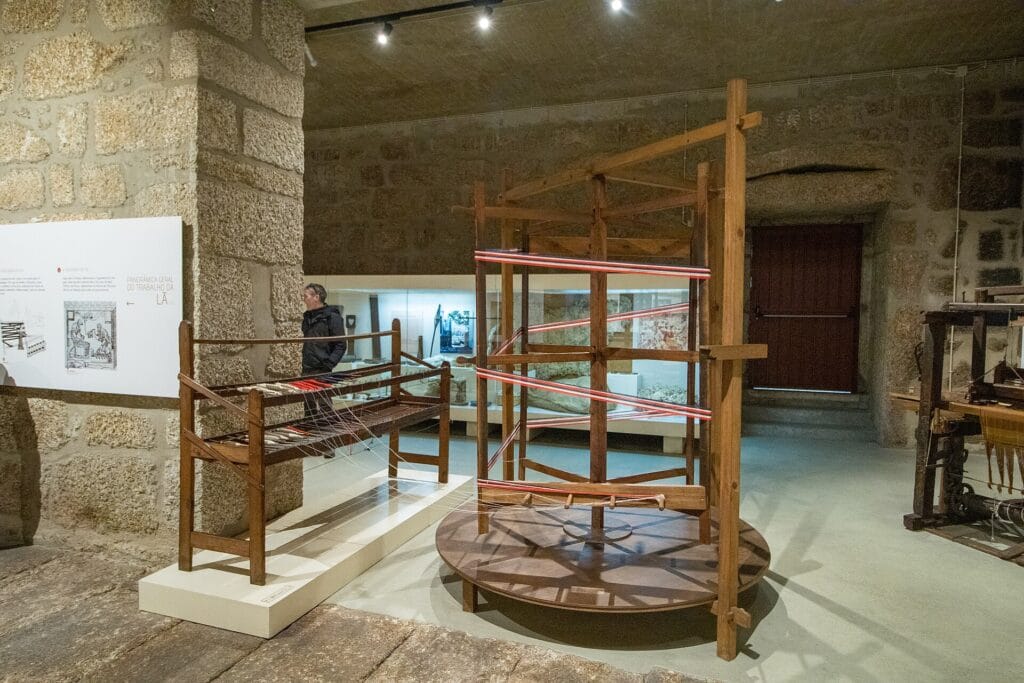
For the historical side, the Museu de Lanifícios of the Universidade da Beira Interior in Covilhã occupies the Real Fábrica de Panos, founded by D. José I on 26 June 1764, and the Pombaline dye house inside it is the museum’s founding reason for existing. It worked as a dye house until 1885, and restoration in the mid-1970s uncovered the original cylindrical wells. The museum opens Tuesday to Saturday, with admission prices not published on the pages we could reach [confirmar].
What this means for a week spent making
Reading the 1690 Regimento next to a Flora-On distribution map is the fastest way to understand the dyer’s Portugal. The archives describe an industry that bought most of its reds abroad and shipped its blues in from the Azores, and the map explains part of why, since the plants that trade wanted were either never abundant here or never wild here.
So we start with what the country does have. The wool we put in your hands on the Colorwork Knitting Retreat in the Algarve is spun from named Portuguese breeds, and 4 of the Retrosaria shades are undyed naturals, the color of the sheep. For the sheep and the mills behind that, see Portuguese wool and the yarn we knit with. For the wider set of textile traditions these dyes once colored, the glossary of Portuguese textiles is the place to start, and the Carrapateira guide covers the stretch of coast where the esteva grows on the cliffs.