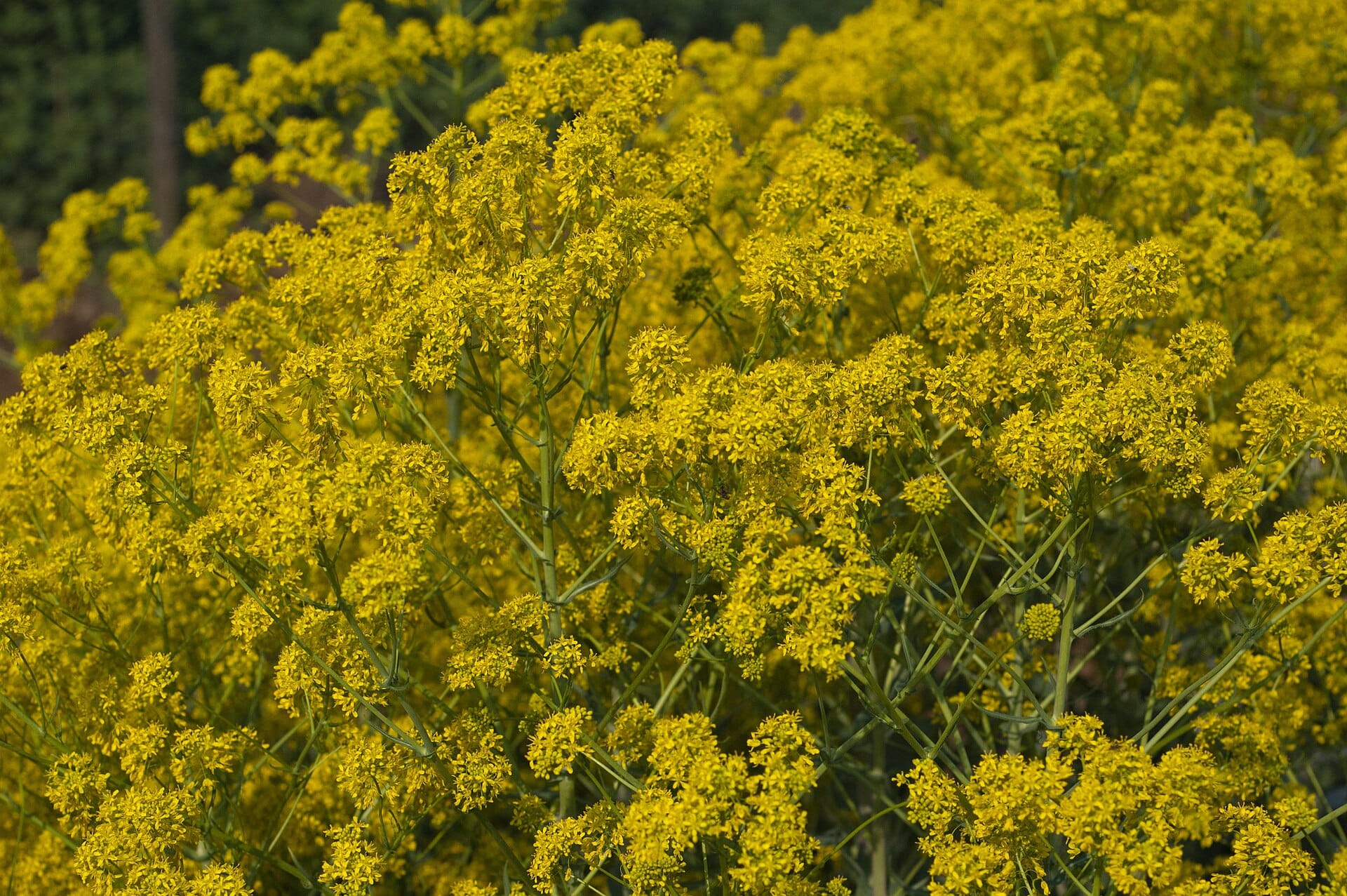
Most Portuguese pottery comes from two crafts. Cities made glazed ware, tiles and porcelain for courts and export, while villages made plain pots from local clay and fired them in pits. Only a few villages still make them, and several of the museums that show their work are closed, so the workshops are the best place to see it.
The short version
- Portuguese ceramics is really two crafts. One was made for courts and export markets and the other for the household next door, and only the second is in danger of disappearing.
- Black pottery is fired in two different ways. Molelos uses a shallow pit called a soenga, and Bisalhães digs a pit about 1.5 meters deep and builds a grate inside it from pots made to be destroyed. Bisalhães has been on UNESCO’s urgent safeguarding list since 2016, which tells you how fragile it is.
- São Pedro do Corval is the best place to watch potters at work. It has about 22 workshops today, up from 8 in 1927, although apprentices are close to nonexistent.
- The famous objects have surprising origins. The Barcelos rooster became a national symbol in 1935 through a state propaganda exhibition in Geneva, and the word azulejo has nothing to do with azul.
- Several museums are closed or unbuilt. The ceramics museum in Caldas da Rainha has been shut since March 2025 and the Bisalhães black pottery museum does not exist yet, so plan your trip around working workshops.
To make sense of any of it, start with a split that most writing on Portuguese ceramics skips.
Two crafts that go by one name
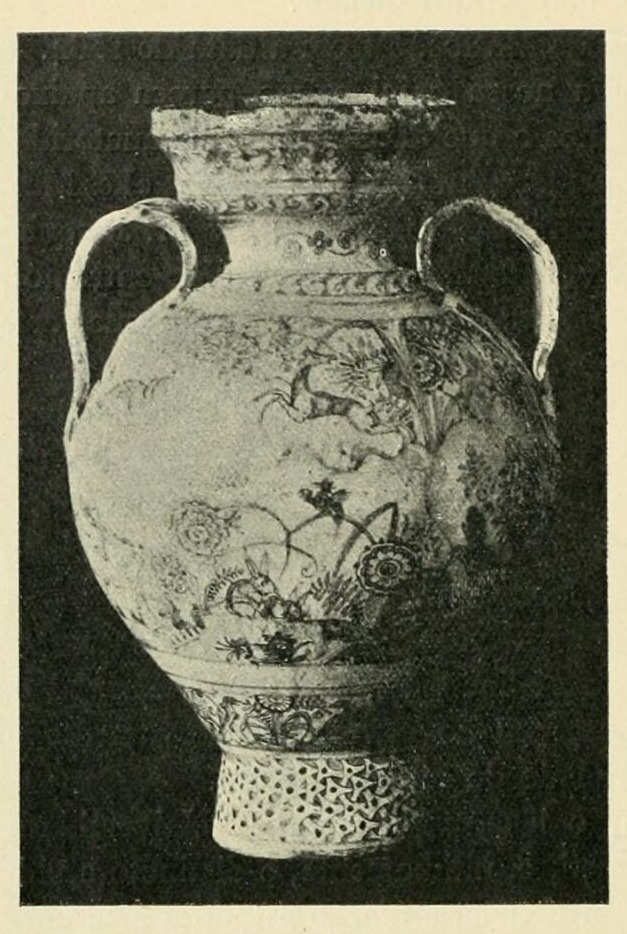
Most of what people call Portuguese ceramics comes from two crafts with different origins and different purposes. The first grew up in the cities and made luxury and export ware. It includes faiança, the tin-glazed earthenware made in Lisbon, Coimbra and Vila Nova de Gaia from the 1500s onward, along with the azulejo and the porcelain that Vista Alegre has made in Ílhavo since the 1830s. Makers refined the clay and glazed it white, and their customers were courts, convents and colonial markets before they were the rest of the world.
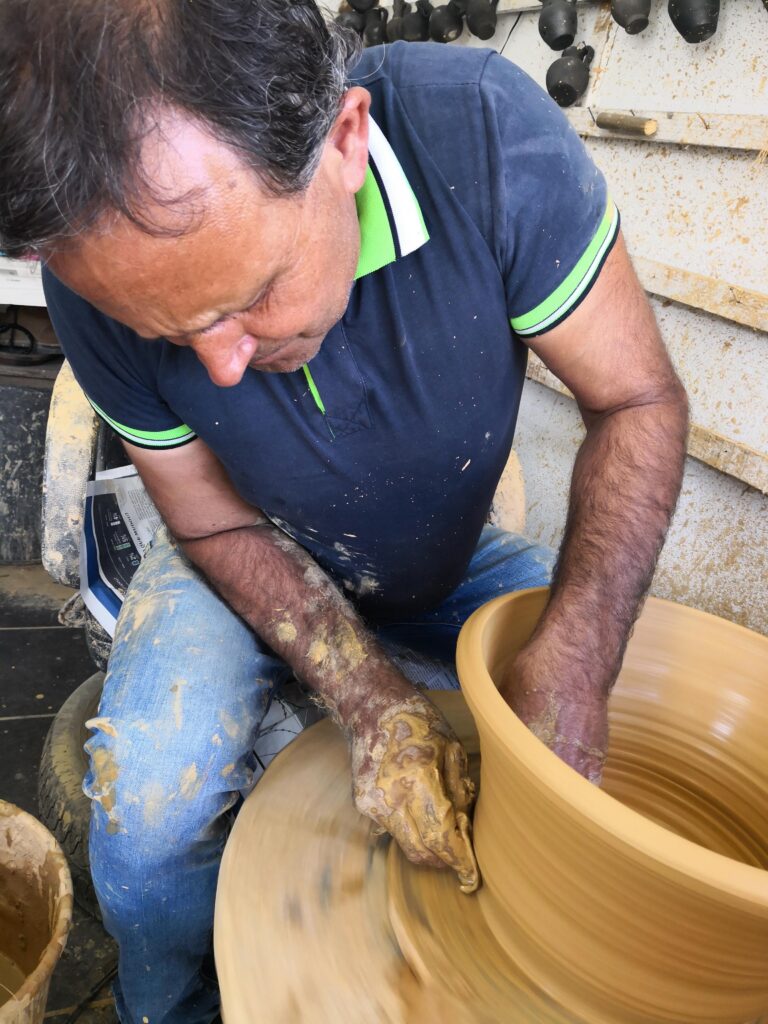
The second craft belonged to village potters, who dug their own clay, shaped it on low wheels or by hand, burnished the surface with a river pebble and fired it in a pit for the household next door. Nobody signed or collected the pots, and for most of the 20th century they earned so little that many potters gave up.
English-language writing often treats Portuguese ceramics as one craft, so a single article can mention Lisbon tiles and Alentejo water jars as if the same hands had made both. The two served different purposes and used different technology, and some of the techniques sit thousands of years apart. The pit firing at Molelos looks more like Neolithic practice than anything in a modern studio, and potters were still using it last year.
When the kiln is a hole in the ground
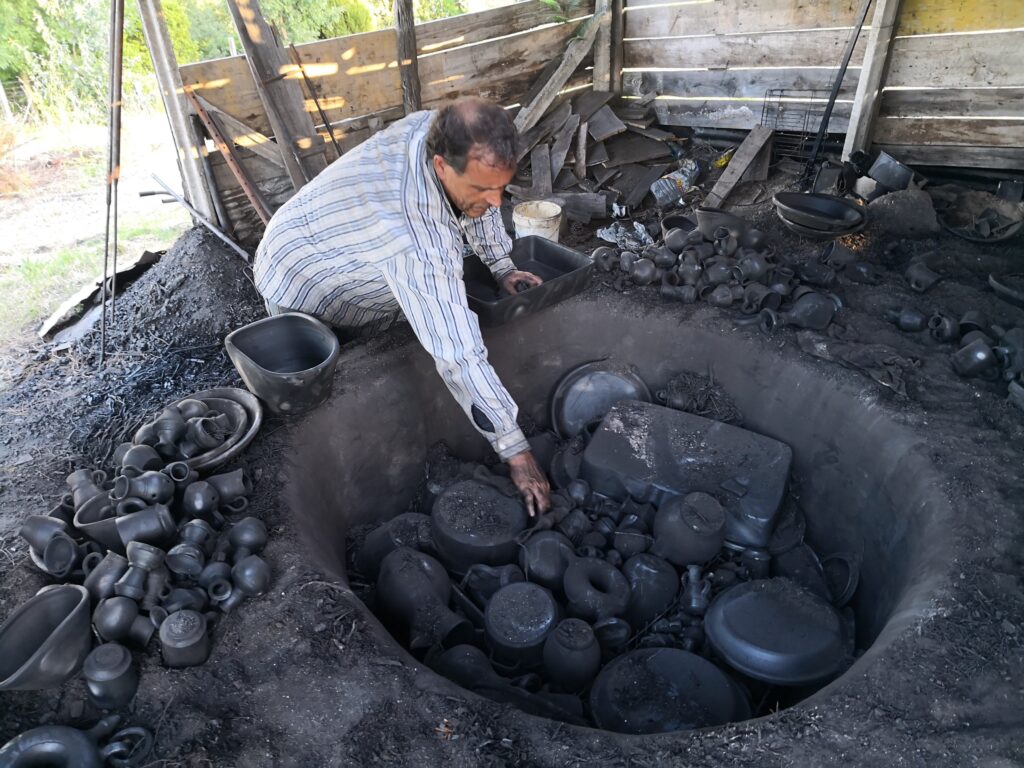
Black pottery, barro preto or louça preta, is ordinary clay turned black by starving the fire of oxygen at the end of a firing, so that carbon drives into the body of the pot. Portugal has several surviving centers, and the two best documented work in different ways.
At Molelos, in the municipality of Tondela, the firing is called a soenga. The Portuguese state inventoried the process as national intangible heritage in April 2025, and the official record names seven potters currently working, among them António Manuel Matos Marques, Carlos Lima, Alexandra Monteiro, José Manuel Lourosa and Maria Fernanda Marques. The record also describes the firing in unusual detail. Pieces are preheated on a raised platform fed with pine needles and dried vine, so they go into the fire already warm and already darkening. While still hot they are set upside down in a shallow pit lined with pine needles and split pine, and covered with clods of earth. Fuel goes in through openings at the base called bueiros. The potter watches the chimney, and when the flame turns bluish and the smoke turns black, seals the opening with a metal lid and buries it. Once the seal is on, carbon does the rest and works its way into the clay.
Molelos potters work two clays, a soft one from the Carvalheira pits in the village and a stronger one from Casal do Rei at Canas de Santa Maria, blended in proportions that depend on what is being made. The shine on a finished piece comes from burnishing with smooth pebbles while the clay is leather-hard, and at Molelos even the rough everyday ware gets it.
Bisalhães, a village in the parish of Mondrões just outside Vila Real, works differently. The pit is about 1.5 meters deep and 2 meters across, and before each firing the potters build a temporary grate inside it out of roncas, unhandled jars made specifically to be destroyed, propped on a stone elbow called a pião. The ware is stacked mouth-down above the grate until the pile rises above the lip of the pit, sometimes by a meter. The fire is fed with gorse, broom, heather, vine prunings and pine needles, raised slowly so nothing cracks, and the whole stack is then buried in earth with a small chimney left at the top. When the potter judges it done, burning pine needles go down the chimney and the chimney is sealed. If the earth cover breaks and lets air in, the pots craze. The academic literature on black pottery in Trás-os-Montes describes this kiln as the only one of its kind in Portugal.
UNESCO added Bisalhães to its List of Intangible Cultural Heritage in Need of Urgent Safeguarding in 2016, the list for traditions at risk of disappearing. Portuguese press at the time counted five potters for whom it was a main occupation, most of them over 75. The nomination file itself contains three different counts from three different official bodies, ranging from five to eight, a sign of how small the group is. Since then the municipality and the national employment institute have run a 13-month vocational course in the craft; of nine people who started, seven finished and are now working, including Sara Marinho, Tânia Ferreira and António Lagoa. One older potter in the UNESCO file put the practical problem plainly, saying that fetching the clay from Chaves, about 60 km away, had become hard for them.
Anyone planning a trip should know that the Museu da Louça Preta de Bisalhães has been announced for an 18th-century house that still holds a workshop and a kiln. The Vila Real council first aimed to open it in September 2025, but as of January 2026 it had only approved the public tenders for the work, and no opening date had been published. Do not go to Bisalhães expecting a museum.
How São Pedro do Corval went from 8 workshops to more than 20
The Alentejo village of São Pedro do Corval sits near Monsaraz, about 26 km from the Spanish border, and has around 1,570 inhabitants. Portugal’s own tourism authorities describe it as the largest concentration of potteries in the country and one of the largest in Iberia. What makes it worth writing about is that someone has actually counted them over time.
Antónia Fialho Conde of the Universidade de Évora assembled the series. In 1890 the surrounding municipality held 38 olarias. By 1905 there were 30 in the village itself, four of them making wine jars. In 1927 only eight advertised in the regional press. The number climbed back to 15 by 1950, reached about 33 in the 1980s, and sits at roughly 22 today. Other recent counts give 20 or 21, and the regional tourism board says more than 25, so the real figure sits in the low twenties. Conde adds that master potters are scarce and apprentices are close to nonexistent, and that says more than any count.
The village was called Aldeia do Mato until 1948, and its parish records go back to 1620. Medieval pottery in the area is linked to freed Moorish craftsmen, and Roman storage jars turned up in the village in the 1960s. The clay is a red terracotta, traditionally dug nearby, settled in tanks and strained through broom, though pre-treated commercial clay is now normal. Unglazed pieces were coated with almagre, an iron-rich red slip, or sealed with beeswax depending on what they were for. Wood kilns reached 750 to 800 degrees Celsius; most workshops now fire with gas or electricity, though some still burn wood.
What most visitors recognize from Corval is the painted decoration, which began with flowers in red, yellow and green and later added scratched designs, cobalt blue and manganese brown. In the traditional workshops the men work at the wheel and the women do the painting. A 2010 University of Évora master’s thesis surveyed 24 workshops in the village and counted 24 potters and about 44 other workers, among them painters, helpers and shop assistants. Most workshops in Corval combine the shop and the workroom in one space, so you can watch someone throw and buy from them in the same visit. The village’s interpretive center, the Casa do Barro, was listed as temporarily closed on the municipality’s own site in May 2026.
Redondo, an hour north, is the other Alentejo pottery town, known for denser floral borders and rural scenes. Published information about it is thin and mostly comes from a single detailed travelogue, which reports that a village that once had around 40 studios now has about 6, and that one workshop still fires in the last wood kiln in the village. The same 2010 thesis counted 8 olarias still working in the town, which points in the same direction.
Barcelos, where the rooster outshone the potters
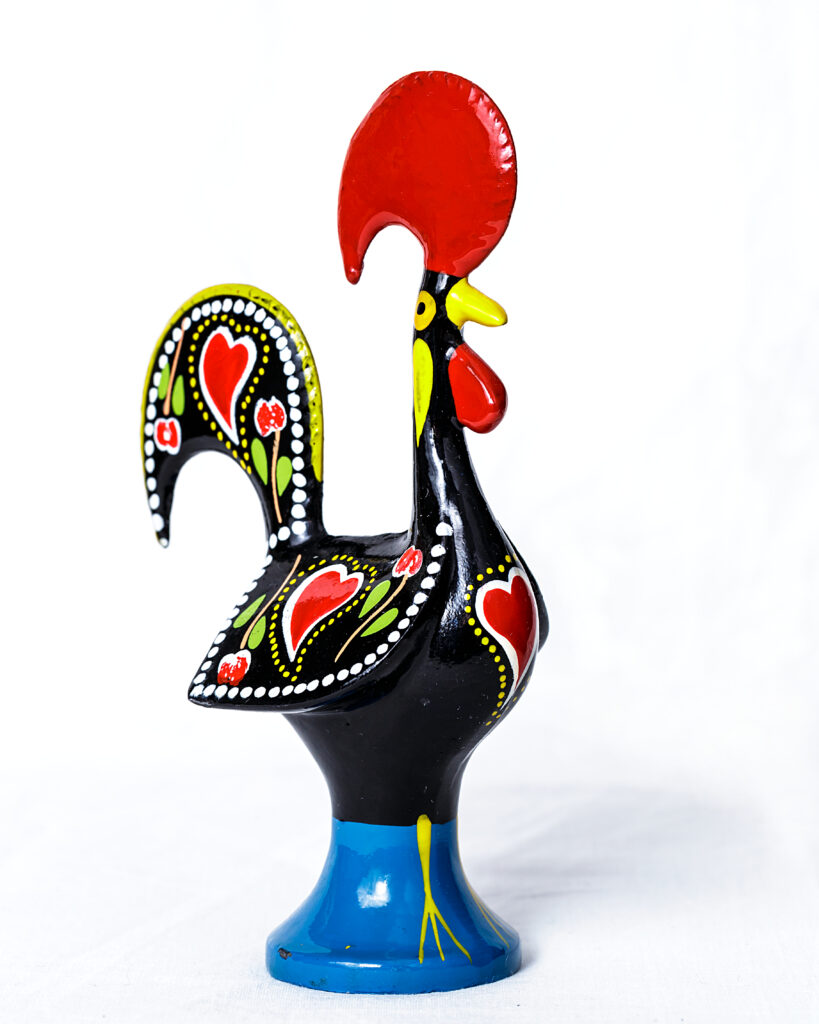
Barcelos in the Minho is the town the souvenir rooster comes from, and the rooster has done its pottery a disservice. The legend is old enough. A Galician pilgrim walking to Santiago was condemned for a theft he had not committed, told the judge it was as certain he was innocent as it was that the roast cockerel on the table would crow, and the bird stood up and crowed. What is less often said is that the legend stayed local until the nineteenth century, when Barcelos potters started modeling it in painted clay. The earliest recorded examples date to 1877.
The rooster became a national symbol in 1935, when a polychrome clay version represented Portugal at an exhibition of Portuguese popular art in Geneva, repeated in Lisbon the following year, both organized by the Secretariado de Propaganda Nacional under António Ferro. The regime wanted an object that read as nationally representative and could be reproduced at scale, and the rooster fit. The black-ground version with red hearts that fills every airport shop appeared in the mid-1950s.
Behind the rooster sits a real tradition, the louça de Barcelos, which includes bowls, large basins, storage jars, water vessels and candlesticks, decorated with wooden stamps, small picks, notched blades and, in one survival worth noticing, hen feathers. The Museu de Olaria in Barcelos, founded in 1963 around the collection of the ethnographer Joaquim Sellés Paes de Villas Boas, holds close to 10,000 objects and occupies the Casa dos Mendanhas in the old center. Its own catalog of glazed Barcelos ware notes that by the time of the fieldwork, only two traditional potters were still identified working with wood-fired kilns and hen-feather tools.
The other Barcelos story is figurado, the modeled figures, and the woman who changed how they were seen. Rosa Ramalho was born Rosa Barbosa Lopes in the parish of São Martinho de Galegos in 1888, learned clay as a child making whistles for fairs, married a miller at 18, raised seven children and gave up the work. She came back to it at 68, after her husband died. The painter and poet António Quadros found her selling figures at a fair near Porto in the mid-1950s and brought her to the fine arts faculty in Porto, and she became the first bonecreira known by name rather than anonymously. She signed with two scratched R’s, worked larger as she aged, gave her Christs distorted proportions, and made a bestiary of hybrid monsters she called Bichos Ferozes. The curator Isabel Maria Fernandes describes that work as coming from a world turned upside down where everything was permitted. Early in her career she had been barred from making religious figures at all, on the grounds that only artists made those and she was a doll-maker. Her granddaughter Júlia Ramalho became a ceramicist, and Júlia’s son António works in the same village.
The market at Campo da República runs every Thursday and has been held on that field since the fifteenth century. The field itself was classified a monument of public interest in 2012.
Caldas da Rainha, where plates grow cabbage leaves
Rafael Bordalo Pinheiro was a caricaturist first, born in Lisbon in 1846, and he invented Zé Povinho in 1875 for the magazine A Lanterna Mágica, a figure of the ordinary Portuguese defined by a rude forearm gesture aimed at authority. In 1884 he founded a faience factory at Caldas da Rainha with his brother, and spent the rest of his life putting frogs, swallows, monkeys, cats and cabbage leaves into glazed earthenware. He died in 1905.
Caldas already had a grotesque, anthropomorphic ceramic culture before he arrived. Maria dos Cacos, who died in 1853, made household vessels in the shape of people. Manuel Mafra, who lived from 1829 to 1905, worked in the Palissy manner and was patronized by Ferdinand of Coburg. Bordalo built on something rather than inventing it.

The factory still works after Grupo Visabeira bought it through Vista Alegre in 2009, when it was close to closing, and in April 2019 the prime minister opened an expansion that had cost more than nine million euros and taken the plant to 12,000 square meters and about 270 workers. The pieces are still largely made by hand. A complex form can need up to 25 molds, a plate takes roughly two weeks to go through the process, and a very large piece can take six months. The cabbage ware is in continuous production and is the line that sells abroad.
If you are planning a visit, note that the Museu da Cerâmica in Caldas has been closed since March 2025 for building works, with the collection moved to municipal facilities and no reopening date announced. The Museu Bordalo Pinheiro, which holds his correspondence alongside around 1,200 of his ceramic pieces, is in Lisbon at Campo Grande, not in Caldas, and has been open since 1916.
Azulejos and the blue that never was

Azulejo comes from the Arabic al-zulayj, polished stone, and describes tiles made in imitation of mosaic. The resemblance to azul is a coincidence that has misled generations of visitors, including a good many guidebooks.
The technique arrived through Seville, where King Manuel I visited in 1503 and then brought Hispano-Moresque tilework to Portugal, and the Arab Room at the Sintra National Palace still carries cuenca tiles with his armillary sphere pressed into them. Cuenca and arista used molds to raise thin ridges of clay between the colors so the glazes could not run together, which is what made tile production practical at scale. Figurative painting came later, after the Italian potter Francesco Niculoso brought maiolica technique to Seville in 1498 and freed tilemakers from the ridge.
The blue and white that foreigners think of as quintessentially Portuguese is, in origin, Dutch. Gabriel del Barco introduced the Delft manner at the end of the seventeenth century, Amsterdam workshops supplied the Portuguese market until King Peter II halted imports between 1687 and 1698, and the last Dutch delivery arrived in 1715. The domestic industry that replaced it was deliberately protected, and it produced the great Baroque panels. The tiled building façade, the thing that defines a Lisbon or Porto street, is a nineteenth-century industrial development, not a Baroque one.
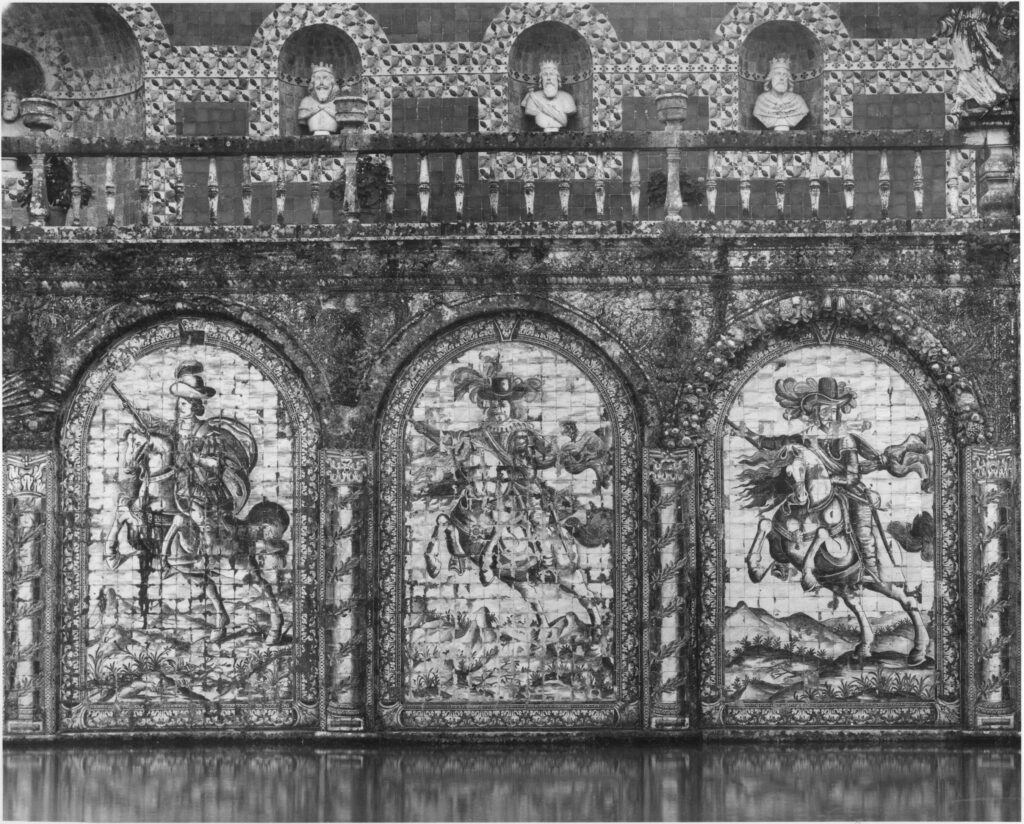
Two working factories matter for anyone who wants to see tiles made rather than hung. Fábrica Sant’Anna was inaugurated in 1741, moved to Ajuda in the 1930s, and still does everything by hand from clay preparation through painting. It lists visits and workshops on its own site and visitors report arranging a tour by email in advance. Fábrica Viúva Lamego was founded in 1849 by António da Costa Lamego and took the widow’s name after he died in 1876; its building at Largo do Intendente in Lisbon is covered in figurative tiles designed by the factory’s artistic director and functions as a nineteenth-century billboard. The shop there closed permanently in April 2021, so go for the façade and nothing else. Production moved to Sintra in 1992, and the factory has since collaborated with Álvaro Siza Vieira, Maria Keil, Manuel Cargaleiro and Rem Koolhaas, among others.
Before you shop, it helps to know that the SOS Azulejo project, set up in 2007 by the museum of Portugal’s criminal investigation police, reported an 84 percent fall in tile thefts nationwide by 2022. Its coordinator, Leonor Sá, has made the sharper point that legal removals and demolitions destroyed far more than theft ever did, and that before Lisbon’s municipal regulation took effect in 2013, tiled façades were coming down almost weekly. A national law passed in 2017 now bans demolishing tiled façades and removing tiles anywhere in the country. A loose antique tile in a flea market may well have come off a protected wall. Buy new hand-painted work from a factory instead.
The lesser-known potters worth a detour
The bonecos de Estremoz went onto UNESCO’s Representative List in 2017. They are hand-modeled clay figures, made in parts and assembled before firing, then painted and varnished rather than glazed, which is why the colors sit so flat and bright. UNESCO dates the tradition to the seventeenth century, and more than 100 figure types have been inventoried, most of them showing Alentejo dress, local trades, popular festivities or religious subjects. One of the recognized types is a potter at the wheel, so the tradition includes a portrait of itself. A Centro Interpretativo do Boneco de Estremoz was created in the Palácio dos Marqueses da Praia e Monforte with live artisan demonstrations and more than 200 current pieces bought from every certified maker. The regional tourism site lists it as open from 9:00 to 17:30 and closed on Mondays.
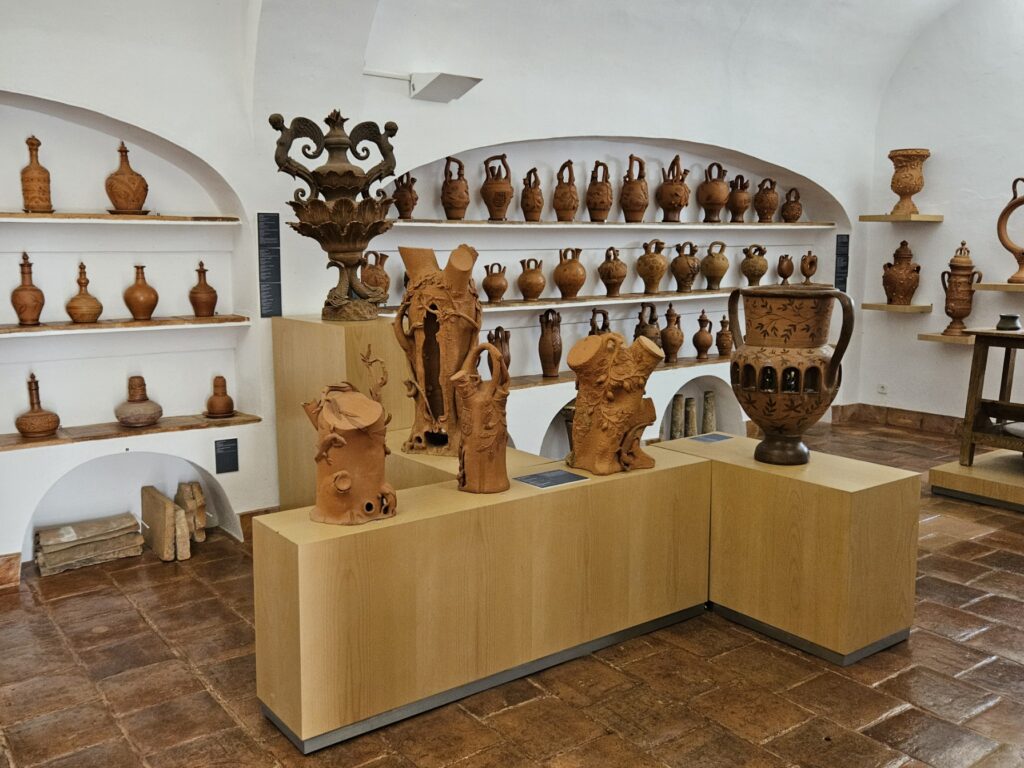
Nisa, in the Alto Alentejo, decorates its pots with chips of white quartz pressed into the clay, a technique called pedrado. The pebbles are fired repeatedly, often six to eight times, which whitens them and makes them easier to break; they are then smashed hot with a paving stone and sorted through sieves by size, with each piece using chips of one grade only. The potter scratches the design into leather-hard clay with a sewing needle, presses the chips in point-first with a thumbnail, and scores the lines again afterward to frame the motif. Caps from toothpaste tubes get used to draw the circles. The decorators are always women, called pedradeiras. The oldest Portuguese archaeological examples of the technique come from a kiln at Mata da Machada, near Barreiro, that worked between 1450 and 1530, and pedrado pots appear in a painted Annunciation dated before 1537. Fieldwork in the late 1990s found 3 potters in Nisa still doing it, and the pieces by then were ornamental rather than functional. Regional press reported in 2021 that 3 families still make it, among them the family of Antónia Carita, where her husband works the clay and she decorates the pieces.
Coimbra lost much of what it once had, since between the sixteenth and eighteenth centuries it was one of Portugal’s three faience centers, specializing in cheap, high-volume ware for domestic and colonial markets, and it developed its own border patterns called rendas, laces, derived from Chinese porcelain and then freely reinvented. Its last traditional faience workshop, the Sociedade de Cerâmica Antiga de Coimbra, closed in 2009.
Where to watch Portuguese pottery being made
Opening hours in this field change constantly and several institutions publish none at all, so treat everything below as a starting point and call ahead.
- Museu Nacional do Azulejo, Lisbon. In the former Convento da Madre de Deus on Rua da Madre de Deus, founded as a convent in 1509 and as a museum in 1965. The permanent route opens with a display on tile materials and technique before the chronology begins, which is the part makers should go to first.
- Museu Vista Alegre, Ílhavo. The museum of a porcelain factory that has run since 1824, with more than 30,000 pieces and optional 45-minute guided tours in languages other than Portuguese. The tour can include the hand-painting workshops and the seventeenth-century chapel on the site. The surrounding company village, built with housing, a theater and a school from 1824 onward, is walkable.
- São Pedro do Corval, Reguengos de Monsaraz. Roughly 20 to 25 working olarias in one village, most with the wheel and the counter in the same room. Some take bookings for hands-on sessions.
- Museu de Olaria, Barcelos. Close to 10,000 objects at Rua Cónego Joaquim Gaiolas, with reserve collections visitable by appointment. Pair it with the Thursday market.
- Fábrica Sant’Anna, Lisbon. Calçada da Boa Hora in Ajuda. Hand-made tiles since 1741, with visits and a tile workshop arranged in advance.
- Museu Terras de Besteiros, Tondela. A room dedicated to black pottery, near the Molelos workshops. Tondela also holds an annual public soenga firing at Raposeiras, which is the single best thing on this list if you can find out when it happens. [confirmar date with the Câmara Municipal de Tondela]
Two closures and one absence are worth knowing before you build an itinerary. The Museu da Cerâmica at Caldas da Rainha has been shut since March 2025, and the Casa do Barro at São Pedro do Corval was listed as temporarily closed in May 2026. The black pottery museum at Bisalhães has not been built.
Why our ceramics retreat sits on the Atlantic coast
Our ceramics retreat, Shaped by the Coast, runs for a week on the Portuguese Atlantic in late September 2027, led by Clara Rêgo. She trained in ceramics at ESAP in Porto and in fine art at the University of East London, with a degree in comics and illustration from ESAP Guimarães in between, and she builds entirely by hand, mostly by coiling and carving. There is no wheel in the week. Her own pieces take their shapes from corals, rocks, minerals and fungi, and from images seen under a microscope, and she describes them as objects for exploring imaginary narratives and myths. One of them, a stoneware root form with a bird’s head at the top called Gota a gota, is painted with glazes, pigments, glass and blood, the last of these a reference to Tiamat, the Mesopotamian goddess said to have made the earth from her own.
Hand-building without a wheel is not a beginner’s compromise or a nod to the past. It is what most of the pottery in this article was made with for most of its history, and it is still how the largest and strangest pieces get made, because a wheel limits what a form can do. One day of the week goes to painting azulejo, which is the one gesture in the retreat that belongs specifically to Portugal.
For the wool and cloth side of the same country, see our glossary of Portuguese textiles and the piece on weaving traditions and the looms still working. For getting around the country generally, Portugal for Makers covers the regions and the practicalities.