
Somewhere between liking the look of a retreat and paying the deposit, most knitters stop and ask the same things. Whether there is real time to knit, what happens if everyone else in the room turns out to be more advanced, and what the week holds besides the class itself. Those questions reach us by email and on social media, and we run these weeks ourselves, so we are answering them through the retreat we know best, the one in the Algarve.
Key takeaways
- Teaching runs three to four hours a day, either as one long session or split between the morning and the afternoon.
- The program also takes you outside. Short walks along the coast are part of the week, for the landscape and for what guests bring back to the table.
- Group size decides how much of the teacher you actually get. In a small group the teacher can see every pair of hands.
- The yarn and the pattern come with the week, chosen or designed for it. You bring your needles.
What a retreat is, and what it is not
A knitting retreat is a week, or sometimes a long weekend, in which a group of knitters lives in one house and works with the same teacher every day. Around the teaching there are meals, walks and long evenings on the terrace.
At a festival you take hour-long classes, and on a tour a coach moves you between mills and museums with workshops fitted into the gaps. A retreat keeps you in one house, with time to settle in and use the place, and it gives you more hours at the needles and more of the teacher than either of the other two. People book the three interchangeably and are surprised by what they get.
Our weeks also take you out to meet the people who live and work around the house. That can be a tasting with a local winemaker or a morning in an artist’s studio, and on some weeks a visit to the farm where the wool starts. Those hours are not sightseeing. They are how a place and its traditions get into what you are making.
What follows is how we designed our 2027 Colorwork Knitting Retreat in the Algarve, six nights at Hortas do Rio in Carrapateira with the Dutch knitwear designer Maaike van Geijn. Every hour of it is a decision we made, from where the walks go to who cooks the lunch.
What a day looks like
Breakfast is served in the morning and nobody is in a hurry to leave the table. There is usually knitting out before the plates are cleared, and there is time for anyone who wants it to walk down to Praia da Bordeira and back before class.
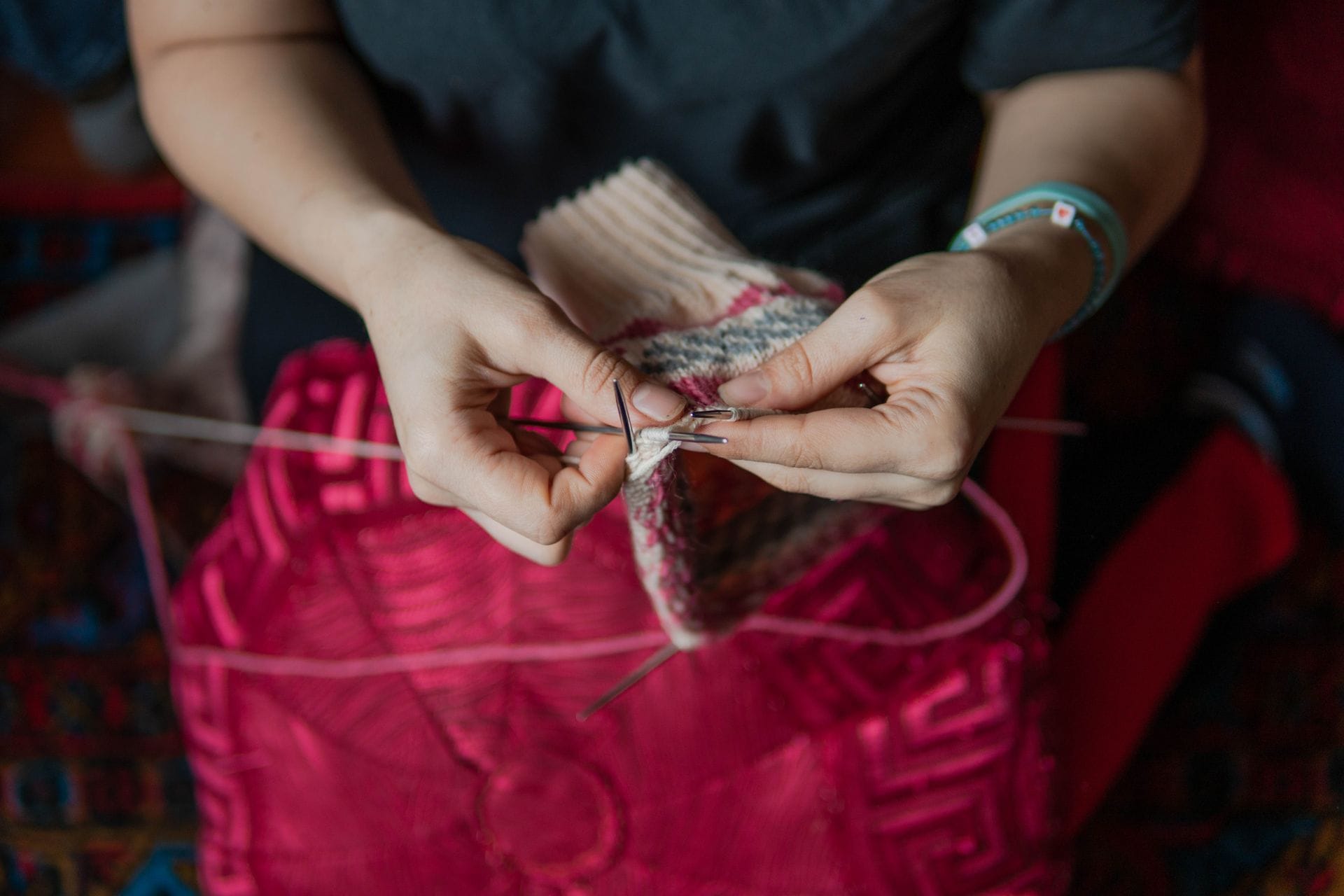
The teaching is the fixed point of the day and it runs three to four hours, sometimes as a single morning session and sometimes divided between the morning and the afternoon. Maaike opens with the day’s technique and then everyone knits while she moves around the table, which is the whole difference between a retreat and a video. You are working next to the person who designed the pattern, so a float that pulls too tight gets corrected in your own hands, on your own needles, before it turns into a habit you take home.
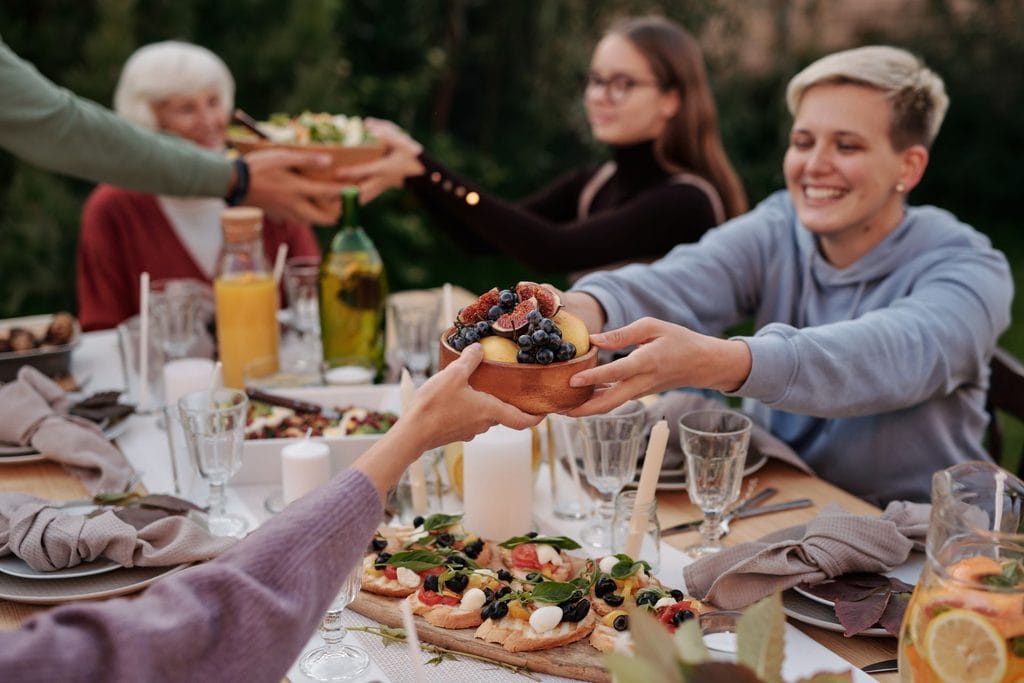
Lunch is local food, cooked with care by people who know the produce around Carrapateira and buy it from the farms and the boats nearby, and there is local wine for anyone who wants it.
Hortas do Rio sits directly on the Rota Vicentina’s Fishermen’s Trail, the coastal path that runs along the cliffs above Carrapateira, so the walks we schedule into the week start at the gate. They are short and easy, and they are there for looking. Guests come back with a photograph of lichen on a fence post, a handful of shells, the particular grey the sea turns before rain, and those things end up in the colors chosen at the table that afternoon.
The rest of the time is free, and guests use it to walk further down to the beach below the farm, to nap, or to stay on the terrace and keep knitting. Maaike also makes herself available on one of those afternoons to whoever wants a second hour on their chart.
Dinner is at the house most nights. In late May the sun does not go down until nearly nine and the evenings stay warm enough to sit out in, and a spontaneous knitting circle on the terrace is the usual way the night ends.
How much of it is actually knitting
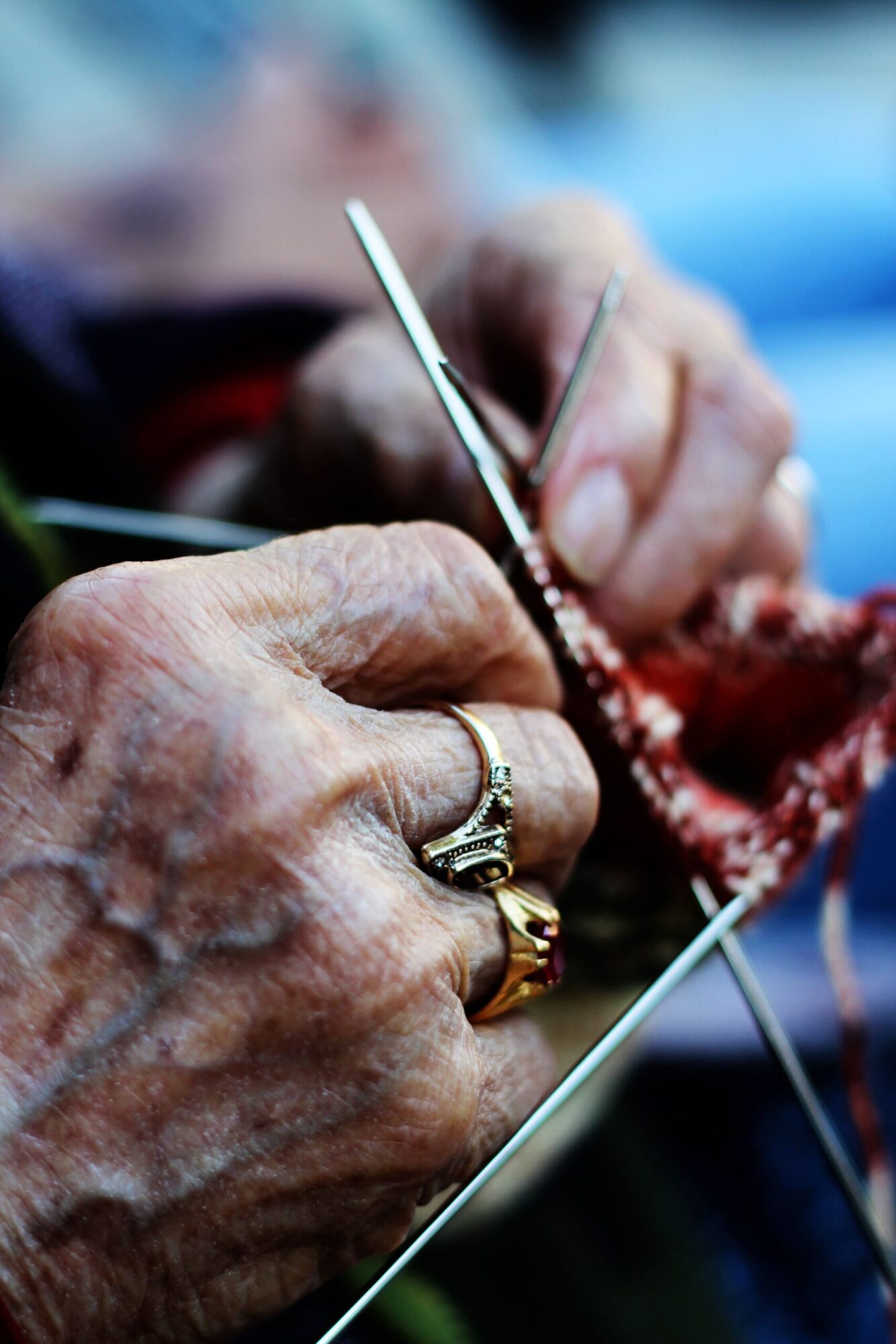
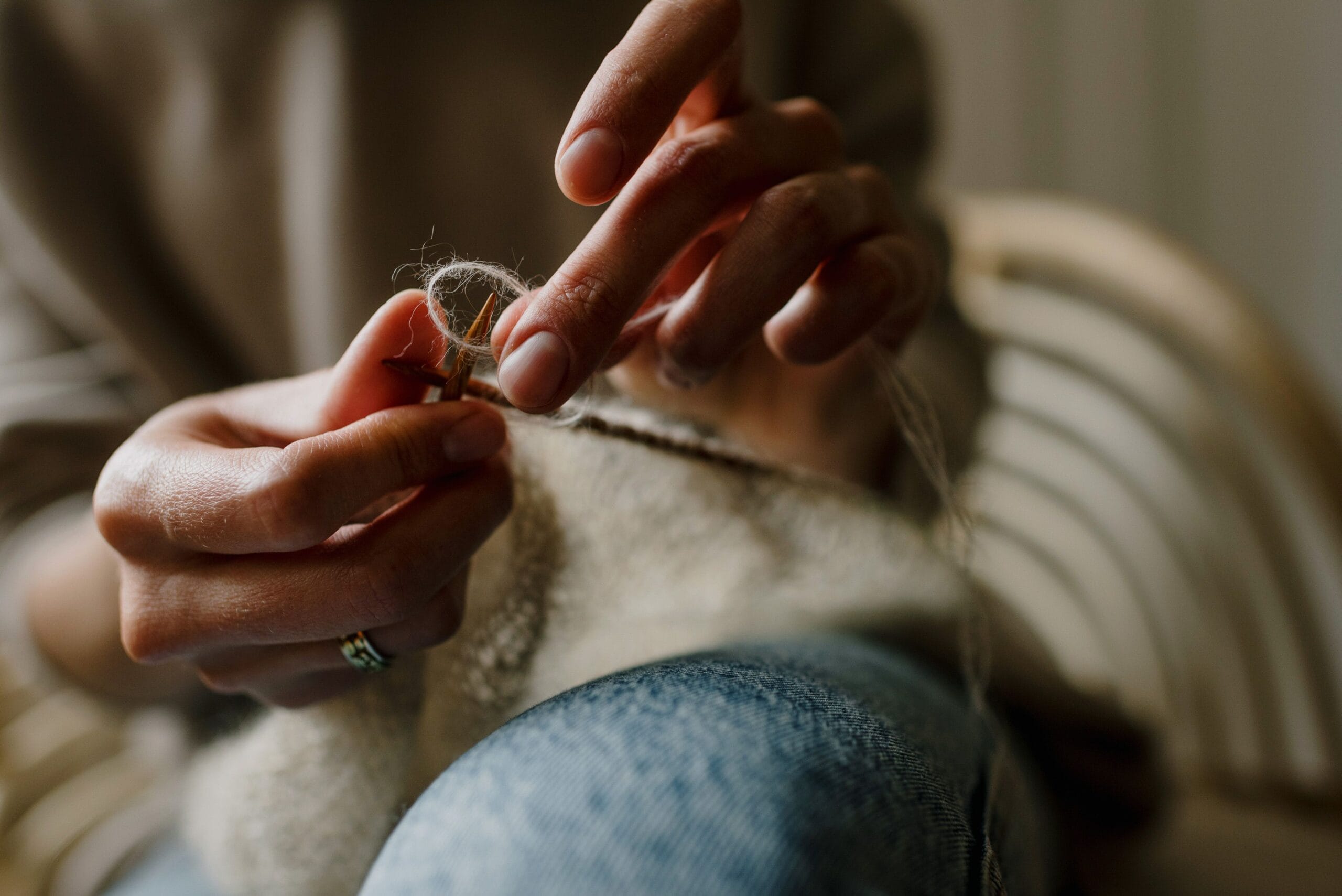
The class takes three or four hours and the rest of the day is yours, so in practice the terrace fills up in the afternoon and again after dinner and guests knit until the conversation runs out. Most of them knit more in that week than in the two months before it, for the plain reason that nothing else is asking for the time.
Those hours run with the same teacher every day, which gives you room to learn a technique properly and keep improving on it while the teacher is there to watch. A week of it is usually enough to finish the piece Maaike designed for the retreat, and guests who arrive expecting to make a start on it tend to leave wearing it, or close to it.
The yarn and the chart come with the week, chosen or designed for it, so the only thing you have to bring is your needles in the sizes the organizer lists. Bring a second project as well if you like. Guests can put the whole week into finishing the retreat piece, or switch between the two when their eyes have had enough of the chart.
What if I am the least experienced person there

In our experience, guests who worry about this on the first morning have stopped thinking about it by the second, usually because someone more experienced has asked them for help with something else.
What does matter is the level a retreat states, because it varies more than people expect. Our Algarve week asks for intermediate to advanced knitters who have done some colorwork and some knitting in the round. Knit the Landscape in the Netherlands wants advanced knitters comfortable with charts, while Trips For Knitters describes its Orkney week as suiting various levels. Read that line before you book, and take it at its word.
In a small group nothing gets past the teacher, and that is why group size is the first thing we would ask an organizer about.
Travelling alone, and the room question
Most of our guests book on their own, and walking into a house full of strangers is the thing they ask us about before anything else. Where retreats differ is in how they handle the room for a guest booking alone.
Some price every bed as a single room, which is what Trips For Knitters does on most of its trips. Others charge a single supplement, and on a Knitting Tours departure that runs from around GBP 999 to EUR 1,239 depending on the week. And some will only give you the shared rate if you bring your own roommate, because they will not pair you with a stranger.
We take the third approach. Shared rooms go to friends booking together, and a guest travelling alone gets a private room with a terrace at the private rate.
Meals are at one table and the teaching is shared work, so by the second evening there is a group and by the fifth there is usually a WhatsApp thread that outlives the trip.
If you want to compare what is running next year, our table of every 2027 knitting retreat we could verify puts dates, prices and group sizes side by side. And the Algarve retreat page has the full week with Maaike and everything included in it.