
Portuguese textiles cover far more ground than most visitors expect: silk embroidered on linen in the Beira Baixa, wool fulled into cloth in the Serra da Estrela, lace worked on bobbins in two fishing towns, rugs embroidered in an Alentejo village since at least 1598. Many of these traditions now hold certification or national heritage status, and in several places you can still buy directly from the artisans or join a class. This glossary lists 16 of them alphabetically, with where each survives and what a traveler can see there.
Key takeaways
- Portugal certifies traditional crafts through written specifications and geographical indications, and several textiles are also inscribed in the national inventory of intangible cultural heritage.
- Castelo Branco embroidery, Arraiolos rugs and the linen of Várzea de Calde are among the textiles on that national inventory.
- Two museums in this list are closed for now. The bobbin lace museum in Peniche closed on September 2026, for about 9 months, and the embroidery museum in Funchal, Madeira, is listed as temporarily closed.
- Most workshops sell directly, and buying certified work is the most useful thing a visitor can do for crafts with only a few practitioners left.
How to use this glossary of Portuguese textiles
Each entry gives the English name first and the Portuguese name in parentheses, because the Portuguese term is what you will see on labels, museum signs and certification seals. Where a tradition is certified, the entry says so. Certification in Portugal means a written specification that sets the materials, techniques and region of production, and pieces made to it carry a seal. National heritage status is a separate recognition, granted by the Portuguese heritage authority, and it is recorded in a public inventory of intangible cultural heritage. Opening hours and prices are the ones published by each institution in September 2026, so check them before you travel.
The map of these traditions follows the materials. Wool belongs to the mountains and the plains, to the sheep of the Serra da Estrela that supplied the mills of Manteigas and Covilhã and to the merino flocks of the Alentejo that still fill the blankets of Reguengos and Mértola. Linen belongs to the wetter north and center, where flax once grew in almost every village and where the embroideries of Guimarães and Viana were first worked on homespun cloth. Silk is the rarest thread, raised in the far northeast at Freixo and embroidered in the Beira Baixa at Castelo Branco. Lace and knitting follow the coast, in fishing towns where women worked while the boats were out. Knowing which material a region produced explains most of what you will find there.
The Castelo Branco, Guimarães, Viana and sweetheart handkerchief entries are covered in more depth in our article on Portuguese embroidery, and burel in our guide to Portuguese wool, which covers the native sheep breeds and the yarn we knit with on the Algarve retreat.
Portuguese textile traditions A to Z
Alentejo blankets (mantas alentejanas)
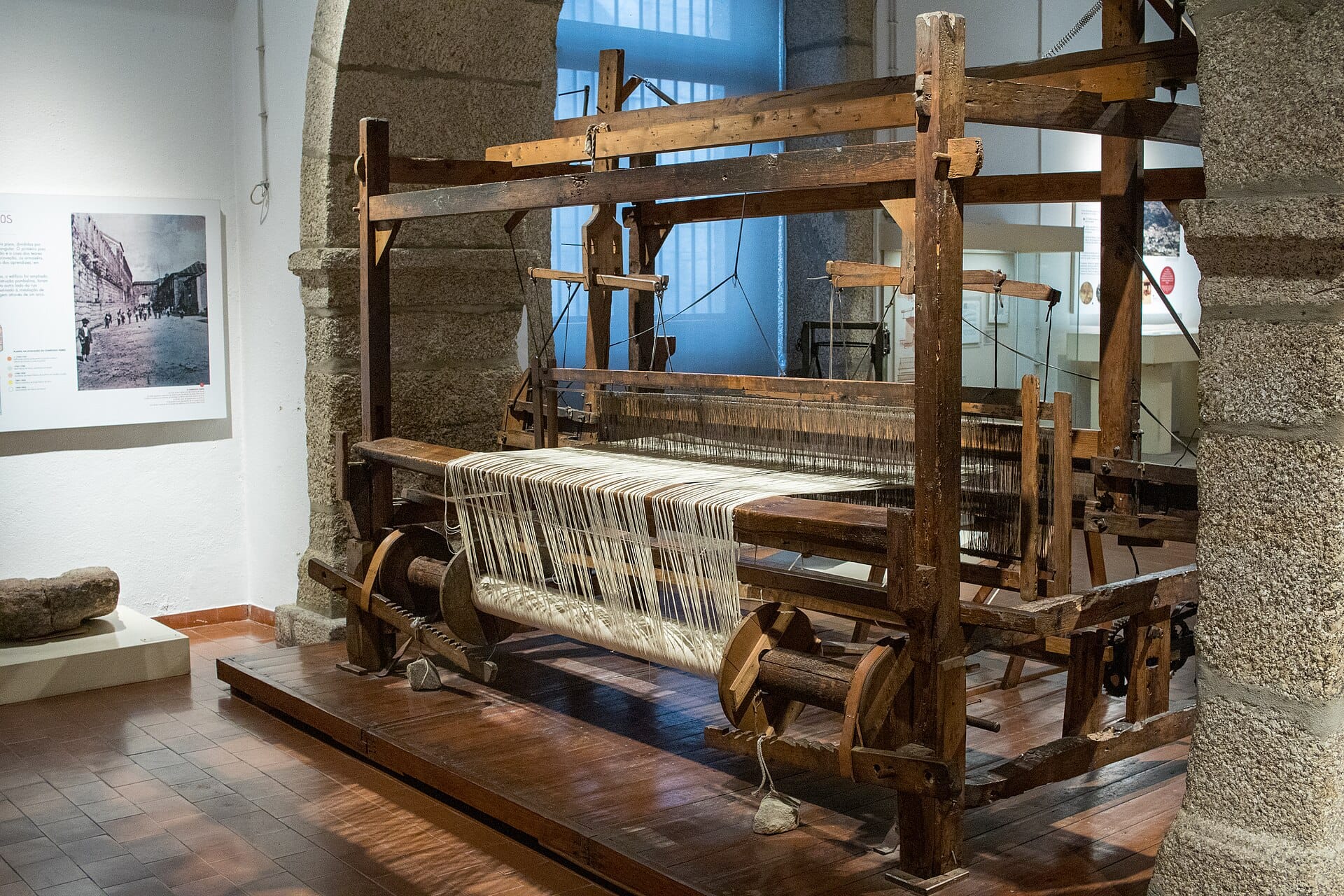
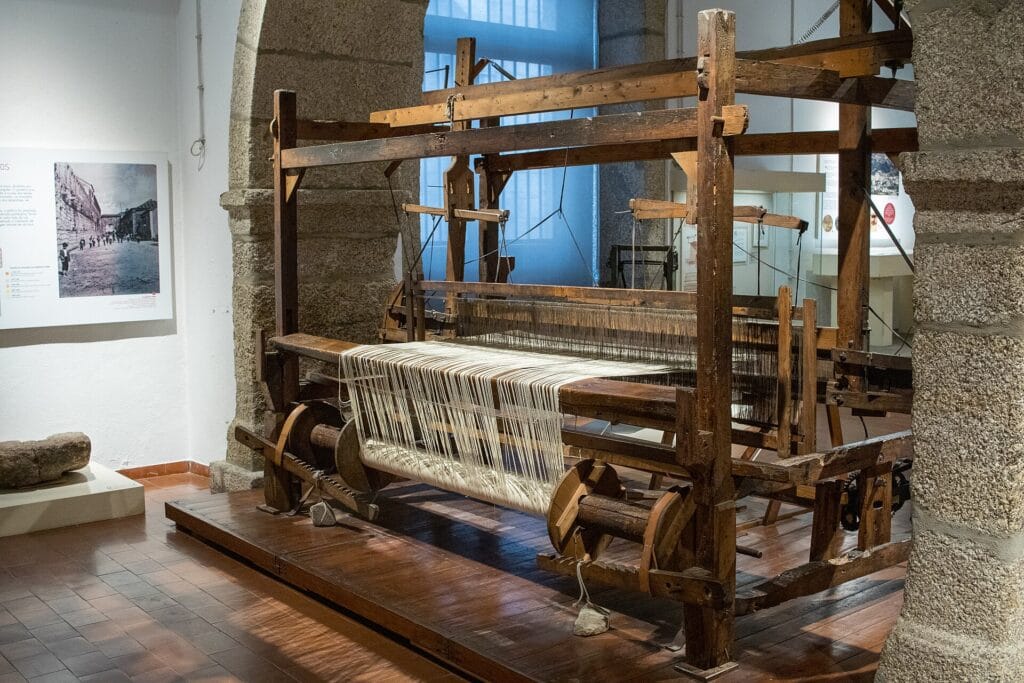
The heavy wool blankets of the Alentejo are still woven by hand in two places worth a detour. In Mértola, on the Guadiana River, the Oficina de Tecelagem is part of the town’s museum and works as a weavers’ cooperative. The weavers Helena Rosa and Fátima Mestre work at the looms and Vitorina cards and spins, and the museum compares the geometric motifs on the blankets with the town’s Islamic-period ceramics. The workshop at Rua da Igreja 35 opens Tuesday to Sunday, 9:20 a.m. to 12:30 p.m. and 2 to 5:20 p.m. In Reguengos de Monsaraz, the Fábrica Alentejana de Lanifícios grew from a workshop started in the 1930s, won a gold medal at the 1958 Brussels World’s Fair and was run from 1977 by the Dutch weaver Mizette Nielsen. It still weaves merino blankets on its old looms and welcomes visitors on weekdays.
Almalaguês weaving (tecelagem de Almalaguês)
Almalaguês is a parish outside Coimbra where weaving on floor looms was once something every woman learned. The pieces, originally linen and now mostly cotton, are bedspreads, rugs and towels in strong colors and fine geometric patterns, and they were sold to households in Coimbra and at regional fairs. A folk group, As Tecedeiras de Almalaguês, was founded in 1976 and keeps a small house museum. In November 2023 a shop and workshop opened in Coimbra’s lower town, at Rua Direita 100, where you can watch the weaving and buy it. The city council supports a bid to certify the craft and to add it to the national heritage inventory, but as of September 2026 neither has happened.
Arraiolos rugs (tapetes de Arraiolos)
Arraiolos rugs are embroidered, not woven. The maker works merino wool through a canvas, usually jute and in the older pé-de-flor style linen, with an oblique cross-stitch known as ponto de Arraiolos, filling first the outlines, then the motifs, then the background. The first written reference, an inventory listing a rug worth 200 réis, dates from 1598. Production peaked in the eighteenth century, nearly vanished by the late nineteenth and revived after 1897. The process was added to the national heritage inventory in 2021, and the heritage record counts about 129 active makers across the municipality, mostly women. Certification is still provisional, granted in November 2025. The Centro Interpretativo do Tapete de Arraiolos, in the former police post on the main square, opens Tuesday to Sunday, 10 a.m. to 1 p.m. and 2 to 6 p.m., with admission at €1.
Beiriz rugs (tapetes de Beiriz)
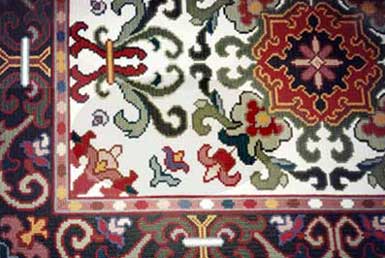
In July 1919 Hilda Brandão Miranda and her husband, the naval engineer Carlos Rodrigues Miranda, set up 2 looms and 6 weavers in Beiriz, near Póvoa de Varzim, to make hand-knotted rugs. By 1934 the factory had more than 60 looms and about 350 workers. Its knot, known locally as the nó Beiriz, is a Turkish-type knot, and Beiriz rugs furnish Belém Palace, the Bank of Portugal and the Peace Palace in The Hague. The factory closed after the 1974 revolution and reopened in the late 1980s under Heidi Hannemann and José Ferreira. Their daughter, Cátia Ferreira, runs it today. We found no published visiting hours, so contact the factory before going.
Bobbin lace (renda de bilros)
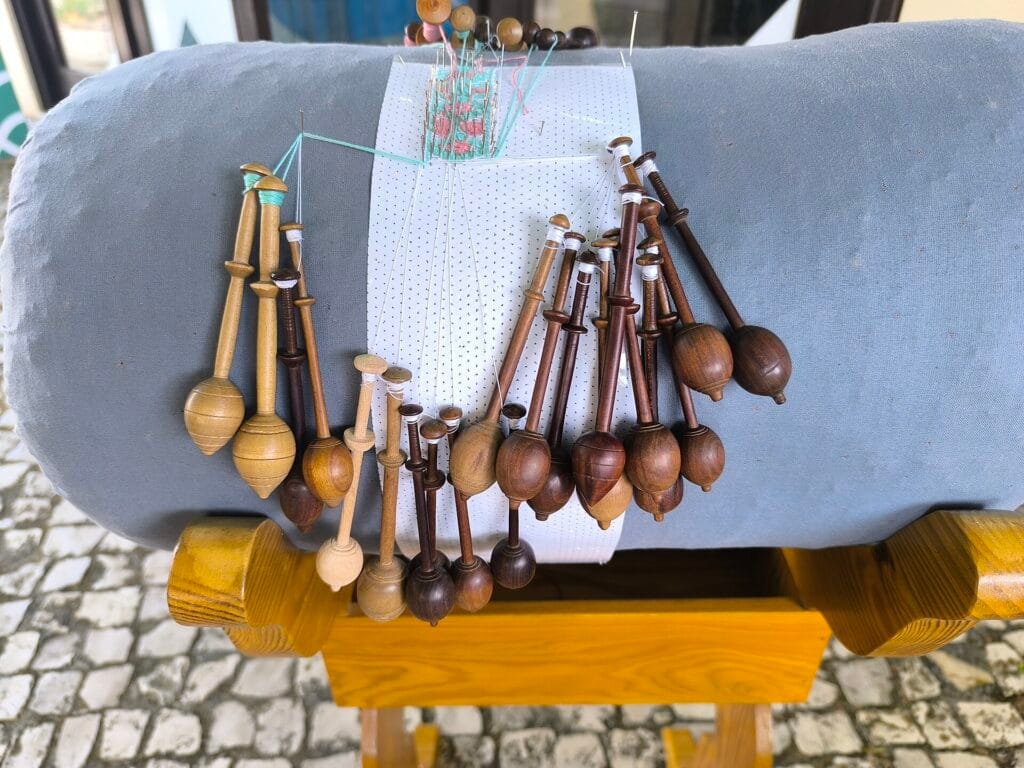
Two coastal towns keep Portugal’s bobbin lace alive. In Peniche, lace-making is documented from the seventeenth century, a lace school opened in 1887 and the municipal school still teaches students aged 6 to 90. The town’s lace museum, opened in 2016, closed on September 21, 2026, for about 9 months of renovation, and the school is moving into the building. In Vila do Conde, north of Porto, the lacemakers’ trade appears in council minutes from 1616 and the lace school dates from 1919. The Museu das Rendas de Bilros, in the eighteenth-century Casa do Vinhal, opens Tuesday to Sunday, and you can watch the school at work on weekdays. Both laces are certified.
Burel
Burel is the wool cloth of the Serra da Estrela, woven and then fulled in hot water until the weave closes into a dense, nearly waterproof fabric that shepherds wore as capes. Traditionally it came from the wool of the local Bordaleira sheep. Two mills in Manteigas still make it. Burel Factory occupies the former Lanifícios Império, founded in 1947 and rescued from insolvency in 2011, and runs tours Monday to Saturday at 11 a.m. and 4 p.m. for €5, booked ahead. Ecolã, a family mill since 1925, also takes visitors and has shops in Lisbon and Porto.
Castelo Branco embroidery (bordado de Castelo Branco)
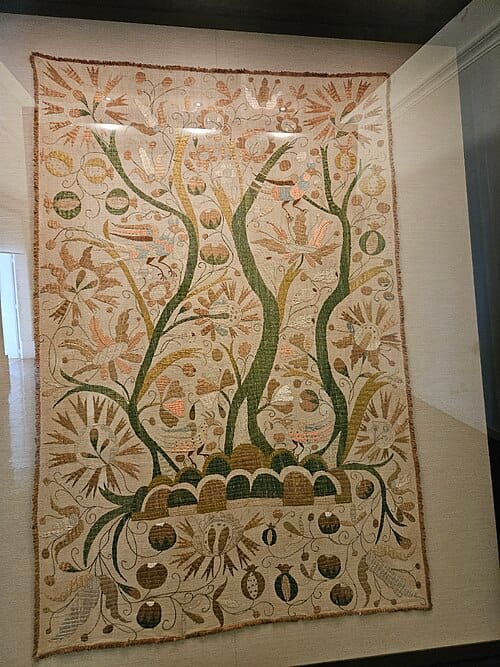
Natural silk embroidered on linen, mostly on large bedspreads called colchas, with trees of life, carnations, birds and figures in eighteenth-century dress. The stitch, ponto de Castelo Branco, lays long strands of silk and ties them down. The tradition probably dates from the seventeenth century and shows the influence of Chinese and Indian textiles. It holds a geographical indication from 2018 and was inscribed in the national heritage inventory in January 2025. At the Centro de Interpretação do Bordado on Largo Camões you can watch embroiderers on weekday mornings and afternoons.
Covilhã wool and the Wool Museum (lanifícios da Covilhã)
For two centuries Covilhã, on the eastern slope of the Serra da Estrela, lived on wool, and in the twentieth century it called itself the Portuguese Manchester. The Museu de Lanifícios of the University of Beira Interior tells the story across several sites. The main one is the Real Fábrica de Panos, a royal cloth mill founded under the Marquis of Pombal in 1764, where the old dye works survive. Another preserves the open-air racks where washed wool once dried beside the Carpinteira stream. The museum opens Tuesday to Saturday, 10 a.m. to 1 p.m. and 2:30 to 6 p.m.

Freixo silk (seda de Freixo de Espada à Cinta)
In Freixo de Espada à Cinta, near the Douro in Portugal’s far northeast, silk is still made entirely by hand. The silkworms are raised for about 45 days, the cocoons are placed in water at 90 °C, and the filament is reeled on a wooden frame, doubled, bleached in boiling soapy water and woven. It takes about 5 kilos of cocoons to make one kilo of silk. Local history credits Jewish artisans with bringing sericulture in the late fifteenth century. The Museu da Seda e do Território, opened in 2015, describes itself as the only place in the Iberian Peninsula making silk wholly by hand, and it sells scarves and blankets in its shop. Gerador reports that some pieces sell for more than €10,000. Sources disagree on how many artisans remain.
Guimarães embroidery (bordado de Guimarães)
Guimarães embroidery uses a single thread color, chosen from red, blue, beige, gray, white and black, and works it on linen with a codified set of 21 stitches. It grew up in the late nineteenth century on the chest panels of farm laborers’ linen shirts and received its geographical indication in November 2010, promoted by the cultural cooperative A Oficina. Certified pieces are sold at the Loja Oficina on Rua Rainha D. Maria II, which also runs occasional workshops.

Madeira embroidery (bordado da Madeira)
Madeira’s embroidery, worked on linen, silk, organdy and cotton in cutwork, satin stitch and several local stitches, became an export industry in the mid-nineteenth century. Elizabeth Phelps, the daughter of an English wine merchant in Funchal, is credited with organizing the island’s embroiderers and bringing their work to London, where it was shown at the Great Exhibition of 1851. Today, according to Visit Madeira, about a dozen companies and around a thousand embroiderers keep it going, and certified pieces carry the seal of IVBAM, the island’s wine, embroidery and handicraft institute. The institute’s embroidery museum in Funchal is listed as temporarily closed. Bordal, a Funchal embroidery house founded in 1962, shows old machinery and thousands of designs in its shop on Rua Dr. Fernão de Ornelas.
Minho sweetheart handkerchiefs (lenços de namorados)
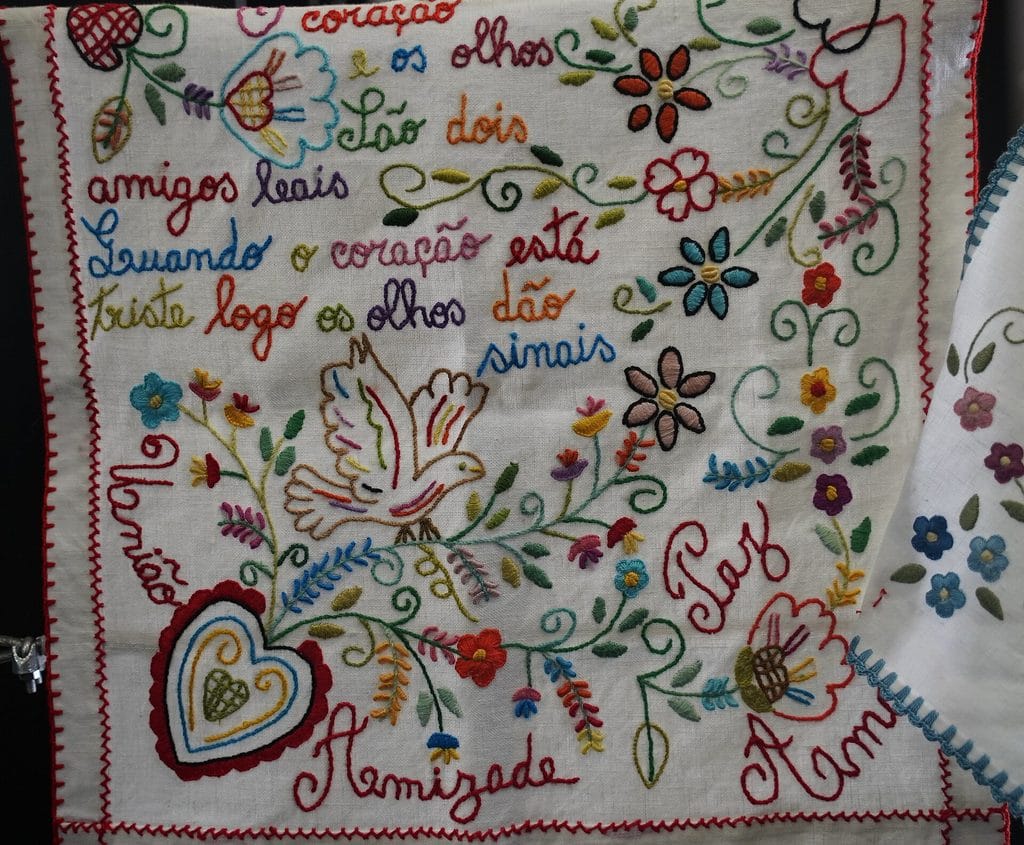
Squares of linen or cotton embroidered with hearts, birds and lines of verse, made by young women in the Minho for the men they hoped to marry. If he wore the handkerchief in public, the courtship had begun. The verses are often misspelled, written as they were spoken. In 2002 the handkerchiefs became Portugal’s first certified craft, and in May 2026 they became the first Portuguese craft protected by the European Union’s new geographical indication for craft goods, Público reported. The Aliança Artesanal cooperative in Vila Verde sells them.
Nisa openwork (alinhavados de Nisa)
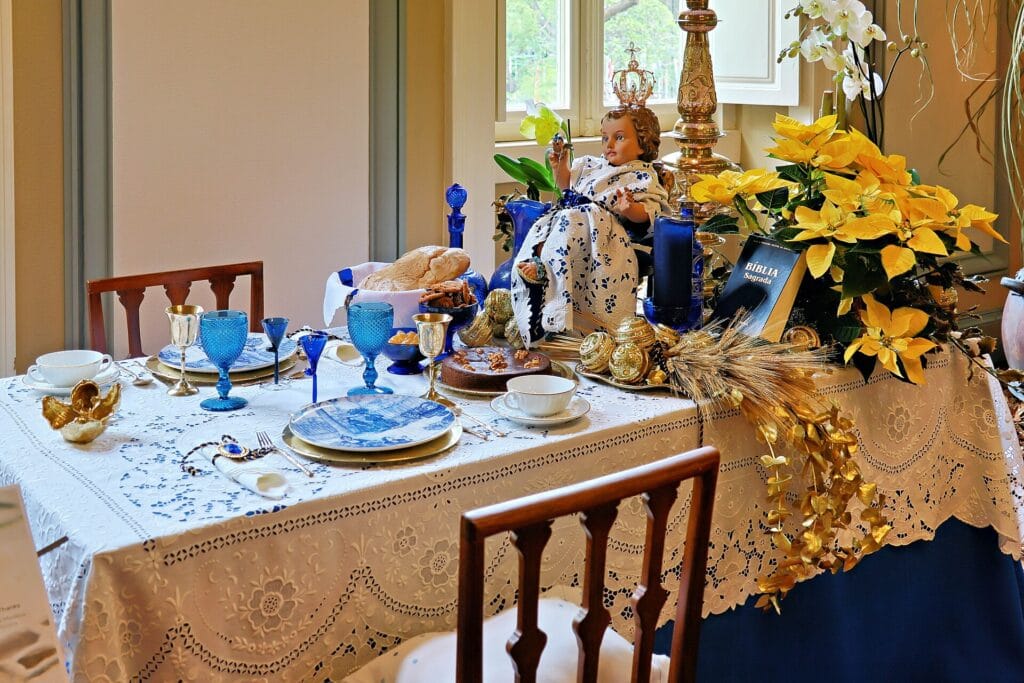
Nisa openwork is a white-on-white embroidery from the northern Alentejo. The embroiderer draws threads out of linen or linen-cotton cloth, wraps the remaining threads in a stitch called ponto de crivo and outlines the design in cord stitch. The motifs were once figures and animals and are now mostly floral. The Museu do Bordado e do Barro in Nisa says the craft is impossible to date precisely and links its decline to longer compulsory schooling in the mid-twentieth century, when girls stopped spending years on their dowry linens. The museum, which also covers Nisa’s felt appliqué and pottery, opens Tuesday to Sunday, 10 a.m. to 12:30 p.m. and 2 to 6 p.m.

Póvoa fishermen’s sweater (camisola poveira)
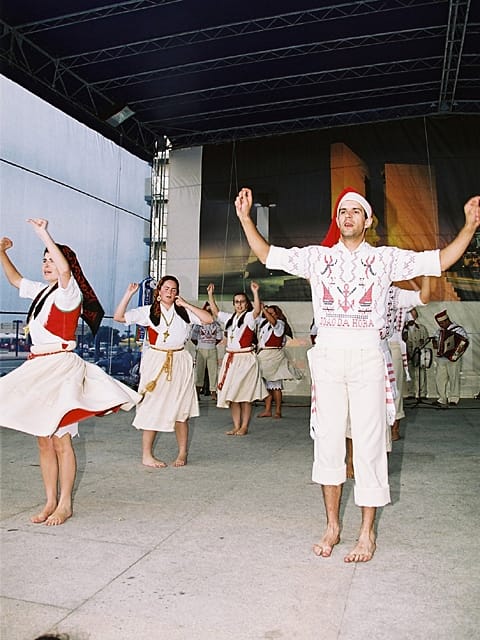
A hand-knitted sweater in white or cream wool, embroidered in black and red cross-stitch with boats, oars, fish, crowns and the siglas poveiras, the family marks the fishermen of Póvoa de Varzim used to sign their property. One sweater takes about 50 hours. The ethnographer António Santos Graça championed it in 1936, and Leitão de Barros’s 1942 film Ala-Arriba! made it famous. In 2021 the designer Tory Burch sold a close copy without credit, as Observador reported. The sweater is now certified, and Póvoa’s municipal museum holds examples.
Várzea de Calde linen (linho de Várzea de Calde)
Várzea de Calde, a village near Viseu, is one of the few places in Portugal where the whole linen cycle survives, with flax sown, processed and woven in the same village. The national heritage record, inscribed in December 2021, describes field work done collectively, fiber preparation and weaving done by women, and work songs that go with each stage, and counts about 35 practitioners aged 30 to 85. The Museu do Linho, at Calçada do Eiró 18, is free and opens Tuesday to Saturday. Weavers can be seen at work if you book ahead, and handwoven linen is for sale.
Viana do Castelo embroidery (bordado de Viana do Castelo)
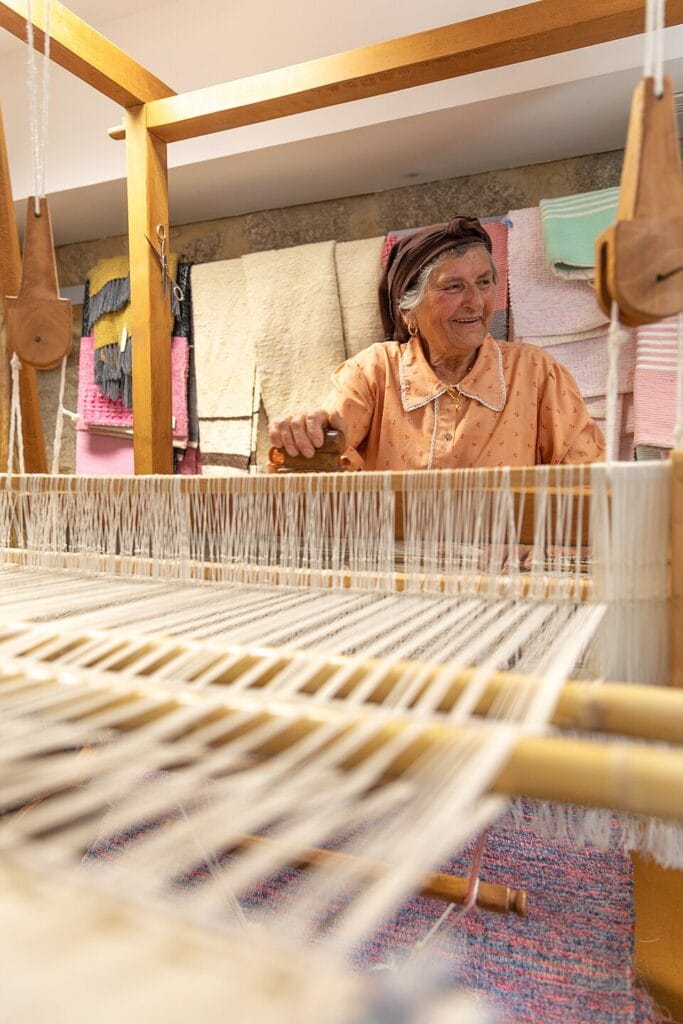
Viana embroidery works cotton thread in red, blue or white on linen or cotton, with hearts and stylized camellias called japoneiras as its signature motifs and a local stitch called trinca-fio. The style became commercial in 1917 and received its geographical indication in 2011. Certified pieces carry two seals, one on paper and one sewn into the cloth, and the municipality lists the certified makers. The Museu do Traje on Praça da República shows the embroidery in the context of the Minho’s traditional dress.

Seeing Portuguese textiles on the ground
Most of these places are small and sit well away from the main tourist routes. A realistic plan groups them by region. The north gives you Guimarães, Vila do Conde, Póvoa de Varzim, Viana do Castelo and Vila Verde within an hour or so of Porto. The center gives you Várzea de Calde, Almalaguês, Castelo Branco and the Serra da Estrela, where Manteigas and Covilhã sit on either side of the mountain. The Alentejo gives you Arraiolos, Reguengos, Mértola and Nisa. Our guide to Portugal for makers turns these into itineraries, with notes on when you need a car.
Our own retreats in Portugal are built around the same idea of making things where they come from. On the Colorwork Knitting Retreat in the Algarve you knit Portuguese-spun wool on the coast at Carrapateira, and Shaped by the Coast, a ceramics week with Clara Rêgo, is coming soon.
Further reading
- Rosa Pomar, Malhas Portuguesas: História e prática do tricot em Portugal (Civilização, 2013), published in English as Portuguese Knitting (Search Press, 2020). The history of knitting in Portugal, with patterns.
- Carlos Laranjo Medeiros, Filomena Lopes and Ana Tostões, Tecelagem Tradicional: Motivos e Padrões (Livros e Leituras, 2000). A bilingual study of traditional Portuguese weaving patterns based on fieldwork in the 1990s.
- The certification specifications published by CEARTE for each certified craft, and the entries in the national intangible heritage inventory on the Património Cultural website. Both are free online and give the most detailed technical descriptions available.